Plan and Maintain Underground Downspout Drainage
Underground downspout drainage moves roof water through buried pipes. The pipe carries water to a safe outlet, such as a pop-up emitter or daylight outlet. You can bury a downspout extension when the pipe has the right size and slope. It must also have strong joints and a safe outlet. Backups often come from clogs, poor slope, broken pipes, freezing, or blocked outlets. Regular checks and flushing help protect foundations, paths, and plants.
Get a Free Estimate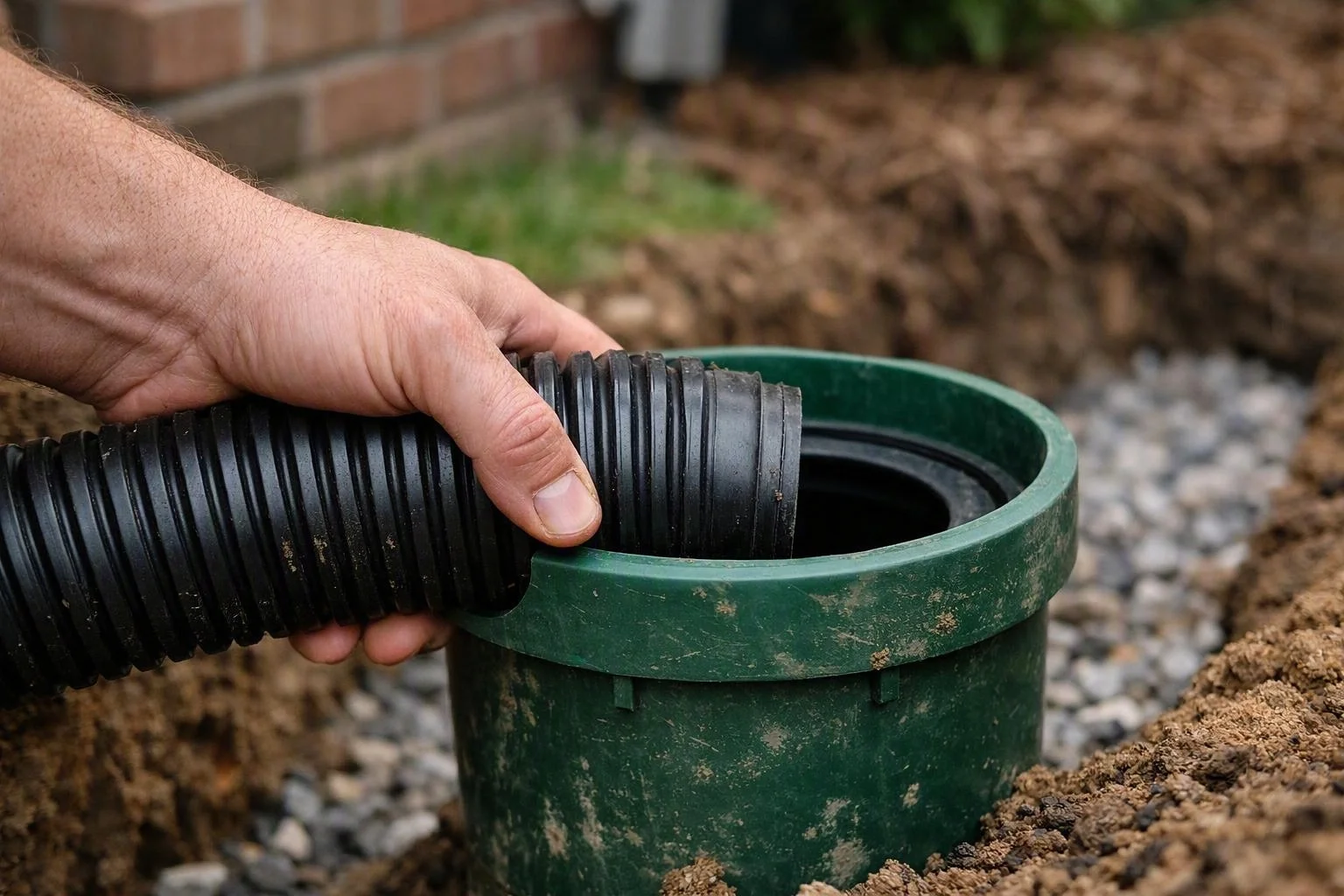
All Pro Roofing and Gutters helps homeowners plan underground drainage, downspout extensions, installation, and repair. We look at the property before choosing a drainage route. The goal is to move water safely, not just hide a pipe.
How Underground Downspout Drainage Works?
Underground downspout drainage moves roof water from gutters into a buried pipe. The pipe carries water by gravity to a safe outlet. Common outlets include pop-up emitters, daylight outlets, and drainage areas. Proper slope and pipe size help the system work well. Sealed joints and a clear outlet matter, too.
Gutters collect water from the roof. Downspouts then carry that water down to the ground. A downspout adapter connects the outlet to the underground pipe. Many homes use solid drain pipe. Its smooth inside helps water flow and keeps soil out.
Roof size affects the amount of water each pipe must carry. Large roofs may need larger pipes. They may also need more than one outlet. Roof valleys can send extra water to one downspout. Soil type matters as well. Clay soil absorbs water slowly. Sandy soil often drains faster.
Many home drainage runs measure 20 to 50 feet. The best length depends on the slope and outlet. A steady slope keeps water from pooling. Cleanouts should stay easy to reach. They allow later checks and flushing.
Good gutter installation and Gutter Guards can keep leaves and grit out. They can't stop every bit of dirt. You still need to check the outlet. Underground drainage should work with the property's slope and stormwater plan.
Why Homeowners Use Underground Downspout Drainage?
Underground gutter drainage moves roof water away from the home. It can help protect foundations, siding, paths, and planting beds. Many homeowners also want a cleaner yard. The system needs strong pipe, good slope, and an easy-to-reach cleanout. It also needs a clear outlet.
First, decide what matters most for your property. You may want foundation protection or safer paths. You may also want to protect plants or improve the yard's look. The right plan must match your roof, soil, and available space.
Why Homeowners Need This Service?
Features That Matter
Common Drainage Challenges
Which Underground Downspout Drainage Option Fits Your Property?
Downspout extensions work best when the outlet, soil, slope, space, and water volume match. Solid pipe with a pop-up emitter fits many homes. Daylight outlets work well on sloped lots. French drains and dry wells need soil that can absorb water. They also need room and easy maintenance access.
Compare each choice before digging. A visible outlet is often easier to maintain. Appearance, freezing, slope, and local drainage rules may affect your choice.
| Option | Best fit | Planning concerns |
|---|---|---|
| Downspout extension | Short routes away from the home | May stay visible and face damage from mowers or foot traffic |
| Solid drain pipe | Moving water to a known outlet | Needs good slope, sealed joints, and cleanout access |
| Corrugated pipe | Flexible routes with few bends | Ridges can hold dirt. Light pipe may shift or crush |
| Pop-up emitter | A clean lawn outlet on a graded lot | Must stay clear and above areas where water may return |
| Daylight outlet | Sloped lots with a safe lower edge | Needs erosion control and space from nearby property |
| French drain | Sites that can absorb filtered water | May clog in fine soil and needs regular service |
| Dry well | Good soil with space below ground | Needs soil testing, overflow planning, and access |
Don't send water into a neighbor's yard or toward a foundation. Keep water away from retaining walls, too. Our team checks the roof, gutters, soil, slope, and drainage route. We also plan for future repairs before recommending a downspout-to-dry-well system.
How to Plan and Install a Buried Downspout Extension?
A buried downspout extension needs a clear route to a safe outlet. The installer should locate utilities first. The pipe must have the right size and slope. Connections should stay secure. The system should include a cleanout and a flow test before backfilling. Bury an extension only when the pipe and outlet can handle roof water.
Trenching may expose roots, weak soil, old pipes, or unknown utilities. Our crews also plan for future repairs. We don't seal every part beneath hard surfaces. We first match the drainage plan to the property's real conditions.
Where Should an Underground Downspout Drain Discharge?
An underground downspout drain should discharge where water can move away safely. It shouldn't return toward the foundation or harm nearby property. Common outlets include pop-up emitters, daylight outlets, swales, and approved drainage areas. The outlet must fit the property's slope, soil, water volume, and drainage rules.
A pop-up emitter works well when a lawn can accept surface water. The pipe must have enough slope to reach it. A daylight outlet can work on a sloped lot. It may need rock or a splash pad to stop erosion. A swale can move water across a wide, gentle slope.
Keep the outlet away from the foundation and low spots. Don't cross a drainage easement without approval. French drains and dry wells need suitable soil and overflow plans. They also need a clear path for maintenance.
Why Is My Buried Downspout Backing Up?
A buried downspout usually backs up because something blocks the flow. Common causes include leaves, roots, dirt, ice, broken pipes, and blocked outlets. Poor slope or small pipes can cause the same problem. Check the connection, cleanout, pipe route, and outlet before digging.
Start with the easiest access point. Remove the downspout connection and look for leaves, roof grit, and mud. Check the cleanout and outlet next. Soil, mulch, or grass may block a pop-up emitter. If water reaches the cleanout but not the outlet, the clog may be farther down the pipe.
Roots can enter through open joints near trees and shrubs. Soil movement can create a low spot. Freezing can stop flow in shallow sections. A crushed pipe will keep failing after cleaning. Repeated gutter overflow may mean the pipe is too small.
Flush the line only when the pipe seems sound. High pressure can damage weak joints. It can also push dirt deeper into the clog. Repeated backups need a professional check. The line may need cleaning, repair, or replacement.
Do Underground Downspout Drains Need Maintenance?
Underground downspout drains need regular maintenance. Gutters can send leaves, roof grit, and dirt into buried pipes. Clean the gutters and check the connections and outlets. Remove dirt from emitters and test flow after heavy storms. Slow drainage or repeated backups may need professional service.
Gutter care is the first step. Clean the system at least once each season. Clean it again after nearby trees shed leaves. Check screens, elbows, and adapters. Look for rust, loose joints, stains, and water spilling over the gutter.
Check the cleanout and pop-up emitter before wet seasons. Remove leaves and dirt from the emitter lid. Make sure it opens when water enters. For daylight outlets, check for erosion, nests, plants, and crushed pipe.
Test each route after heavy weather. Look for slow flow, bubbling soil, wet foundation areas, or water moving toward the home. Also check for frost movement and soil settlement. Make sure landscaping hasn't covered the outlet.
Our team can flush a sound line and find blockages. We can replace damaged pipe sections or change the outlet. Timely downspout repair can protect the foundation and limit yard drainage problems.
Questions About Gutter Installation and Gutter Guards
How Does Underground Downspout Drainage Work?
It carries roof runoff from the gutter system through a buried pipe to a controlled outlet. Gravity moves water through the pipe when the slope is right. The pipe must fit the runoff volume. Connections must stay secure, and the outlet must stay clear.
Can I Bury My Downspout Extension?
Yes, a downspout extension can be buried with the right solid pipe. It needs a steady slope and proper utility clearance. The outlet must handle the roof runoff. Add a cleanout and test the flow before covering the trench.
Where Should an Underground Downspout Drain Discharge?
It should discharge in a safe, approved area away from the foundation. Water shouldn't harm nearby property. Options include a pop-up emitter, daylight outlet, swale, or infiltration system. The best choice depends on soil, slope, runoff, and local rules.
Why Is My Buried Downspout Backing Up?
Common causes include clogs, roots, broken pipes, poor slope, ice, and blocked emitters. Check the connection, cleanout, pipe route, and outlet first. Ongoing backups may need cleaning, repair, or replacement.
Do Underground Downspout Drains Need Maintenance?
Yes. Clean gutters and inspect the pipe connections. Clear the pop-up emitter and check the outlet. Test flow after heavy weather. Slow drainage, standing water, or repeated backups may need professional cleaning or repair.
If gutter water erodes soil, pools near the foundation, or backs up underground, our team can check the route and outlet. Contact us to discuss your drainage needs.
Related Resources
How Much Does Gutter Installation Cost in Memphis?
Memphis gutter installation cost
What It CostsHow Much Do Downspout Installation and Extensions Cost?
downspout installation and extension cost
What It CostsHow Much Does a Gutter-Connected Rainwater Harvesting System Cost?
rainwater harvesting gutter system cost
Compared ToShould You Repair or Replace Your Gutters?
gutter repair vs replacement