
What is a Downspout?
Downspout is a vertical pipe that carries water from a gutter to the ground or a drainage system. It collects roof runoff at a gutter outlet and directs that water away from siding, foundations, walkways, and landscaping. For more detail, see How Much Does Gutter Installation Cost in Memphis?.
Quick Facts About Downspout
Category
Gutter drainage component
Used for
Moving roof runoff away from buildings
Common confusion
A downspout is not the same as a gutter
Also called
Downpipe, Leader
Often discussed with
Downspout Installation, Downspout Extensions
Key Takeaways About Downspout
- Downspouts move roof runoff from gutters to the ground or an approved drainage point.
- A properly placed outlet reduces soil erosion, basement moisture, and foundation drainage problems.
- Downspout size, spacing, slope, and discharge location affect how well a gutter system performs.
- Extensions, splash blocks, or underground drains can carry water farther from the building.
- Clogs, loose joints, and crushed sections can cause water to spill beside the foundation.
Understanding Downspout

Downspout is the vertical part of a rainwater drainage system. It connects to an opening in a gutter. It carries roof runoff downward. The pipe may end near the soil surface. It may connect to a splash block. It may feed an underground drain. Its main job is controlling where roof water leaves the gutter system.
Related glossary terms: Runoff, Splash Block, Catch Basin.
Common downspout materials include aluminum, galvanized steel, copper, and vinyl. Rectangular and round shapes are widely used. Sizes depend on roof area, rainfall flow, gutter capacity, and local practice. A downspout differs from a gutter. The gutter collects water along the roof edge. The downspout carries water toward its discharge point.
How Downspout Works, Is Measured, or Is Used?
Rain falls on the roof. It flows toward the lower roof edges. It enters the gutter. The gutter directs water toward a downspout outlet. This outlet is sometimes called a drop outlet. Gravity moves water through the vertical pipe. Water then reaches a discharge area. Sealed joints and secure fasteners keep water inside during heavy rain.
Installers check downspout opening size, pipe dimensions, length, attachment points, and discharge method. Roof area and roof pitch affect runoff volume at each outlet. A long extension may be needed near the foundation. Underground drainage can carry water farther. It needs a suitable outlet and enough slope. This helps prevent standing water.
- Gutter outlet receives water from the gutter channel.
- Elbows change the pipe's direction near walls and ground level.
- Extensions move discharge farther from the structure.
- Straps or brackets keep the pipe aligned against the wall.
Why Downspout Matters?
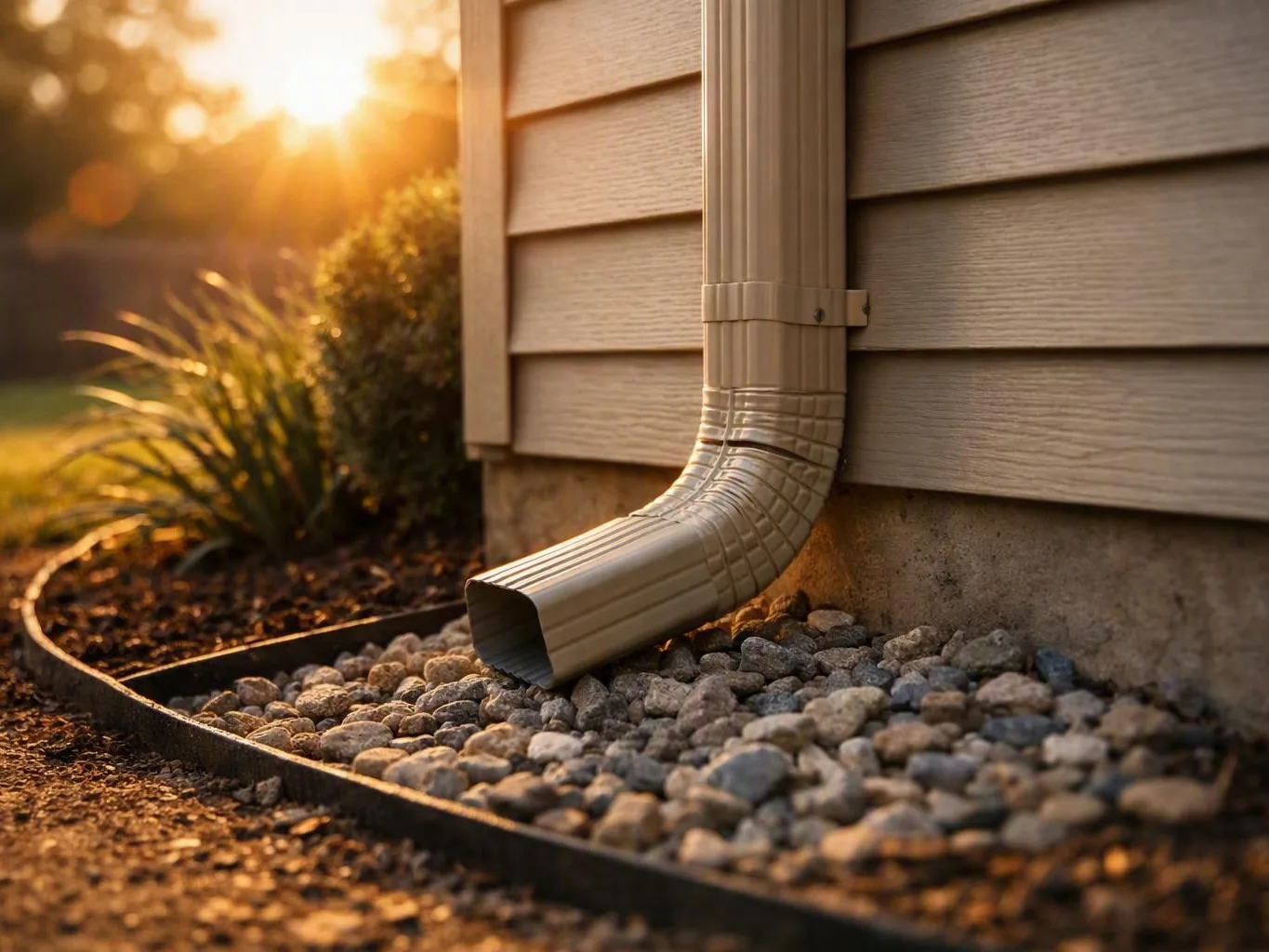
A well-planned downspout system helps prevent concentrated runoff from washing soil away. It can reduce splashback onto siding. It can limit water near foundation walls. Poor discharge control may cause damp crawl spaces. It may cause basement moisture and settlement near footings. It may also damage landscaping.
Downspout performance also affects gutter performance. Gutters can overflow even when they're clean. This happens when too few outlets serve the roof area. It can also happen when a pipe can't handle incoming flow. A gutter inspection should check the outlet, pipe, joints, fasteners, and discharge location. It shouldn't focus only on leaves in the channel.
When Downspout Matters Most?
Downspouts become especially important during intense storms. They're also important after roof or gutter changes. Properties with clay soil or limited drainage need care. Memphis receives periods of heavy rain. Water may move quickly from a roof into a small discharge area. Homes with shallow slopes or narrow side yards need careful planning. Nearby walkways can also limit discharge space.
Check the system after storms for overflow marks, separated seams, dents, and soil trenches. Water shouldn't discharge onto a neighbor's property or against a foundation. It shouldn't cross a walkway and create a slip hazard or winter ice. Extensions, splash blocks, and underground piping should direct water to a stable area. The area must accept the flow without erosion.
How to Evaluate Downspout?
- Check whether each downspout is firmly attached, vertically aligned, and free of visible cracks or crushed sections.
- Look for water stains, soil trenches, or mulch displacement below each discharge point after heavy rain.
- Confirm that discharge ends away from the foundation and does not flow onto walkways or neighboring property.
- Compare outlet spacing and pipe size with the roof area, gutter size, and local rainfall conditions.
- Test underground extensions for standing water, blockage, and a clear outlet after a storm.
Related Concepts Compared
Downspout vs. Gutter
A gutter collects water along the roof edge. A downspout carries that collected water downward and away from the building.
Downspout vs. Splash Block
A splash block is a surface device placed below a downspout outlet. It spreads and redirects discharge, while the downspout transports the water.
Downspout vs. Scupper
A scupper is an opening or channel that drains water through a parapet wall or roof edge. A downspout is a vertical pipe attached to a gutter or outlet.
Downspout vs. Underground Downspout Drainage
Underground downspout drainage uses buried pipe to carry discharge below the surface. A standard downspout remains visible above ground.
Expert Note
A downspout should be judged by its discharge location, not only by its pipe condition. A clean, secure pipe can still create foundation problems if its outlet ends in a low area that holds water.
Common Mistakes or Myths About Downspout
- Assuming a clean gutter will prevent overflow when the downspout or outlet is blocked.
- Ending the pipe beside the foundation without an extension or other discharge control.
- Using a short extension that drains onto a walkway, driveway, or neighboring property.
- Ignoring loose straps, open seams, and disconnected elbows after severe weather.
- Connecting underground pipe without checking its slope, outlet, and blockage risk.
Downspout in Practice: A Real-World Example
A two-story Memphis home has gutters that collect water from a large rear roof section. During storms, one downspout releases water beside the foundation and creates a soil trench. Adding a properly sloped extension moves the discharge to a stable area in the yard and reduces concentrated erosion.
Sources & Further Reading on Downspout
Related Services
Related Terms
Runoff
Runoff is water from rain, melting snow, or irrigation that flows across roofs, soil, pavement, and…
Splash Block
Splash Block is a shallow, sloped device placed below a downspout outlet to direct roof runoff…
Catch Basin
Catch Basin is a covered drainage container that collects surface water and traps leaves, soil, and…
Stormwater
Stormwater is rainwater or melted snow that flows over roofs, pavement, soil, and other surfaces instead…
All Pro Roofing and Gutters
Have Questions About Downspout?
Contact All Pro Roofing and Gutters for practical guidance on Downspout and related gutter installation and gutter guards work in Memphis.