
What is Gutter Slope?
Gutter Slope is the slight angle that directs water through a gutter toward a downspout. Installers create this angle by positioning the gutter ends at different heights along the roof edge. A properly set slope helps prevent standing water, sediment buildup, overflow, and premature gutter damage during heavy rain.
Quick Facts About Gutter Slope
Category
Gutter installation measurement
Formula
Vertical drop divided by horizontal run
Common benchmark
About 1/4 inch per 10 feet
Used for
Directing water toward downspouts
Common confusion
Gutter slope is not the same as roof pitch
Also called
Gutter Pitch, Gutter Fall
Key Takeaways About Gutter Slope
- Gutter slope directs collected rainwater toward one or more downspouts.
- Installers measure slope as a vertical drop over a horizontal distance.
- A common residential benchmark is about one-quarter inch of drop per ten feet.
- Too little slope can cause pooling, while excessive slope may look uneven.
- Long gutter runs may need a center high point and downspouts at both ends.
Understanding Gutter Slope
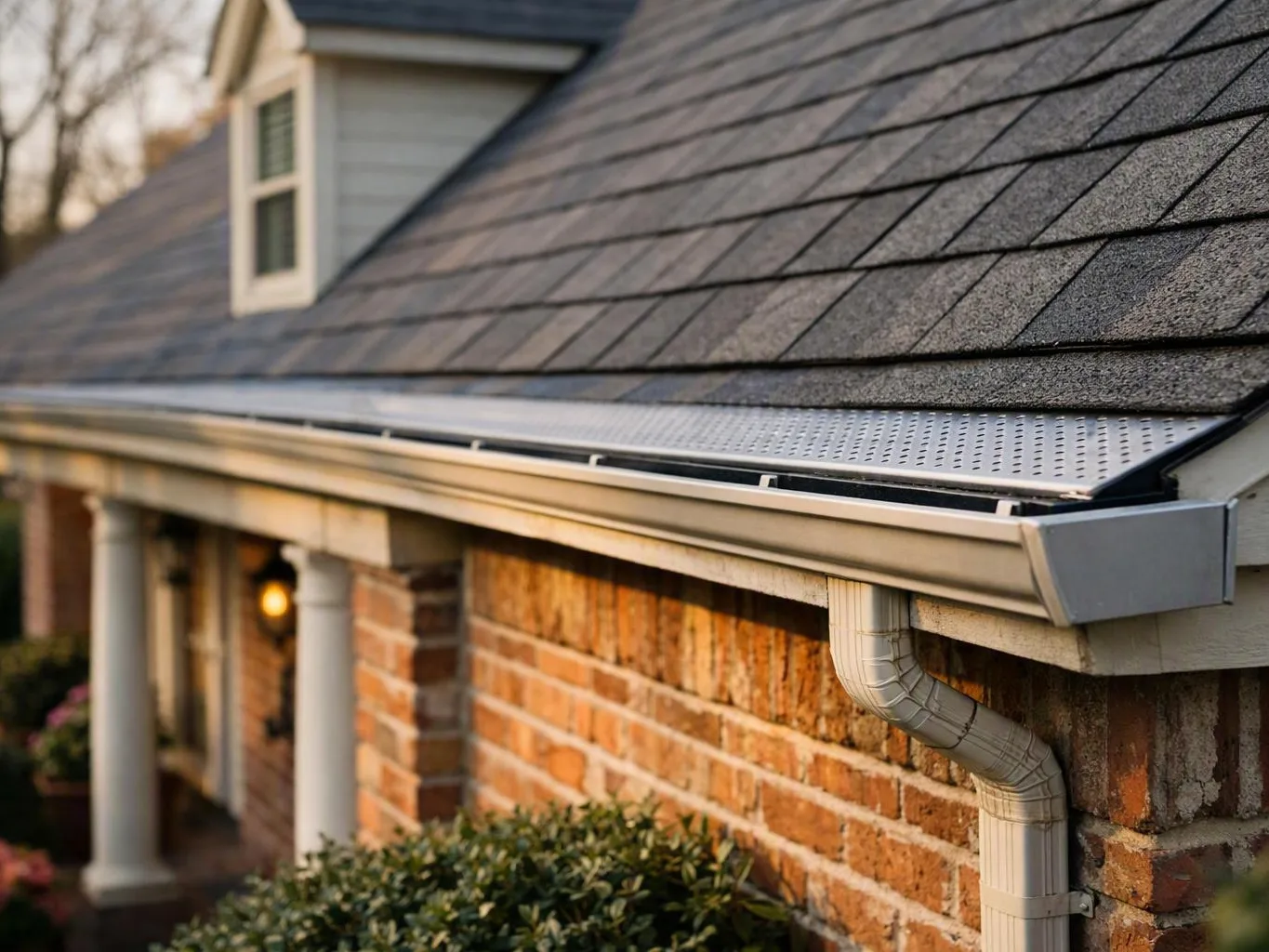
Gutter slope is the planned tilt inside a gutter system. The gutter sits slightly higher at one end. It sits lower near a downspout, so gravity moves rainwater through the channel. The angle is small enough to remain visually subtle while still supporting steady drainage.
Related glossary terms: Gutter Pitch, Downspout, Gutter Hangers.
A level gutter may hold water after a storm, even when the gutter appears clean. Standing water adds weight and encourages sediment buildup. It can expose seams and fasteners to longer periods of moisture. An excessive slope can create an uneven appearance. It may also reduce how much water the gutter holds near the high end.
How Gutter Slope Works, Is Measured, or Is Used?
Installers measure gutter slope as vertical drop over horizontal distance. A common residential benchmark is about one-quarter inch of drop for every ten feet of gutter. The best setting depends on the gutter profile, roof layout, outlet locations, and local construction practices. For example, a twenty-foot run may drop about one-half inch from its high point to its downspout.
The installation process starts by identifying the roof edge, outlet positions, and desired high points. The installer marks the fascia, then sets a chalk line or laser line. The installer attaches gutter hangers and checks the run before securing every fastener. Long or divided runs may use a center high point with downspouts at both ends. This limits the distance water must travel.
Why Gutter Slope Matters?

Correct slope helps a gutter channel move water before the channel reaches its working capacity. This can reduce overflow over the front edge. It can also limit wetting near the fascia board, siding, foundation, and walkways. Slope doesn't replace adequate gutter size, sound hangers, sealed miter joints, or properly sized downspouts.
Drainage performance depends on the entire system, not one measurement. A gutter with good slope may still overflow if roof runoff exceeds its capacity. It may also overflow if a screen blocks the outlet. A downspout may discharge too close to the foundation. Evaluation should include water flow, attachment strength, outlet placement, and nearby building materials.
When Gutter Slope Matters Most?
Gutter slope deserves close attention during new installation, replacement, and repairs. It matters when repairs move a downspout or replace a gutter section. It also matters after fascia work, roof replacement, or storm damage. Changes in the roof edge can alter the gutter line. Areas with long runs, several roof planes, or heavy runoff need careful outlet planning.
Inspection is especially useful when you see water pooling, a sagging gutter, or staining below the gutter. It also helps when you see overflow during ordinary rain. Leaf guards and screens can reduce debris entry. They don't correct a gutter that lacks slope. In Memphis, frequent seasonal downpours make clear outlets and firm hangers important. Consistent drainage is also an important part of the assessment.
How to Evaluate Gutter Slope?
- Measure the vertical drop from the high point to the downspout over the full horizontal run.
- Look for standing water or sediment after rainfall, especially near the center of a gutter section.
- Check that hangers support the gutter without visible sagging, twisting, or separation from the fascia.
- Confirm that outlets and downspouts match the roof runoff path and do not discharge against the foundation.
- Run water through the gutter and watch for slow movement, backflow, or overflow at seams.
Related Concepts Compared
Gutter Slope vs. Gutter Pitch
Gutter pitch is a common synonym for gutter slope. Both terms describe the angle that moves water through a gutter toward a downspout.
Gutter Slope vs. Roof Pitch
Roof pitch describes the steepness of a roof surface. Gutter slope describes the smaller drainage angle built into the gutter, so the two measurements serve different purposes.
Gutter Slope vs. Roof Runoff
Roof runoff is rainwater flowing from the roof into the gutter system. Gutter slope controls how that water travels after it enters the gutter.
Gutter Slope vs. Downspout
A downspout is the vertical pipe that carries water from the gutter to the ground or a drainage outlet. Gutter slope helps move water to the downspout opening.
Expert Note
A single slope value does not fit every gutter run. Outlet placement, gutter size, roof drainage area, fascia condition, and the number of corners often matter more than chasing a precise angle across the entire system.
Common Mistakes or Myths About Gutter Slope
- Assuming a gutter must be perfectly level to work correctly.
- Setting the slope before deciding where downspouts will discharge.
- Using excessive slope that makes the gutter visibly uneven.
- Ignoring sagging hangers and blaming every drainage problem on the slope.
- Installing a leaf guard over a gutter that already holds standing water.
Gutter Slope in Practice: A Real-World Example
A thirty-foot gutter run drains to a downspout at the right end. An installer sets the left end about three-quarters of an inch higher than the right end, based on a common quarter-inch-per-ten-foot benchmark. A water test then confirms that flow reaches the downspout without pooling at the center.
Sources & Further Reading on Gutter Slope
Related Services
Related Terms
Gutter Pitch
Gutter Pitch is the slight downward slope installed along a gutter run so rainwater flows toward…
Downspout
Downspout is a vertical pipe that carries water from a gutter to the ground or a…
Gutter Hangers
Gutter Hangers are hardware pieces that attach a rain gutter to a building’s fascia, rafter tails…
Fascia Board
Fascia Board is a long, straight board attached along the lower edge of a roof, where…
All Pro Roofing and Gutters
Have Questions About Gutter Slope?
Contact All Pro Roofing and Gutters for practical guidance on Gutter Slope and related gutter installation and gutter guards work in Memphis.