What Happens During a Professional Gutter Inspection?
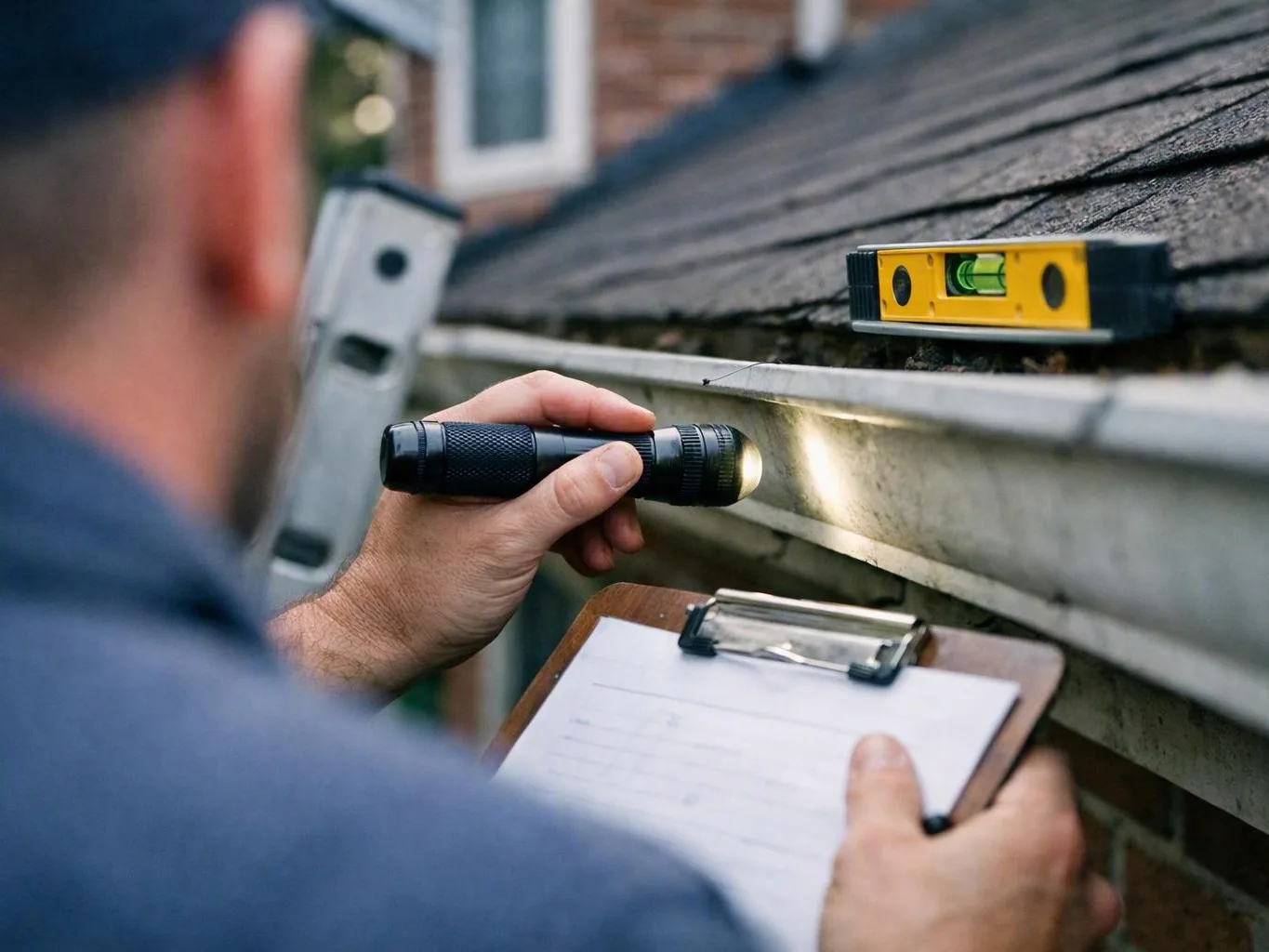
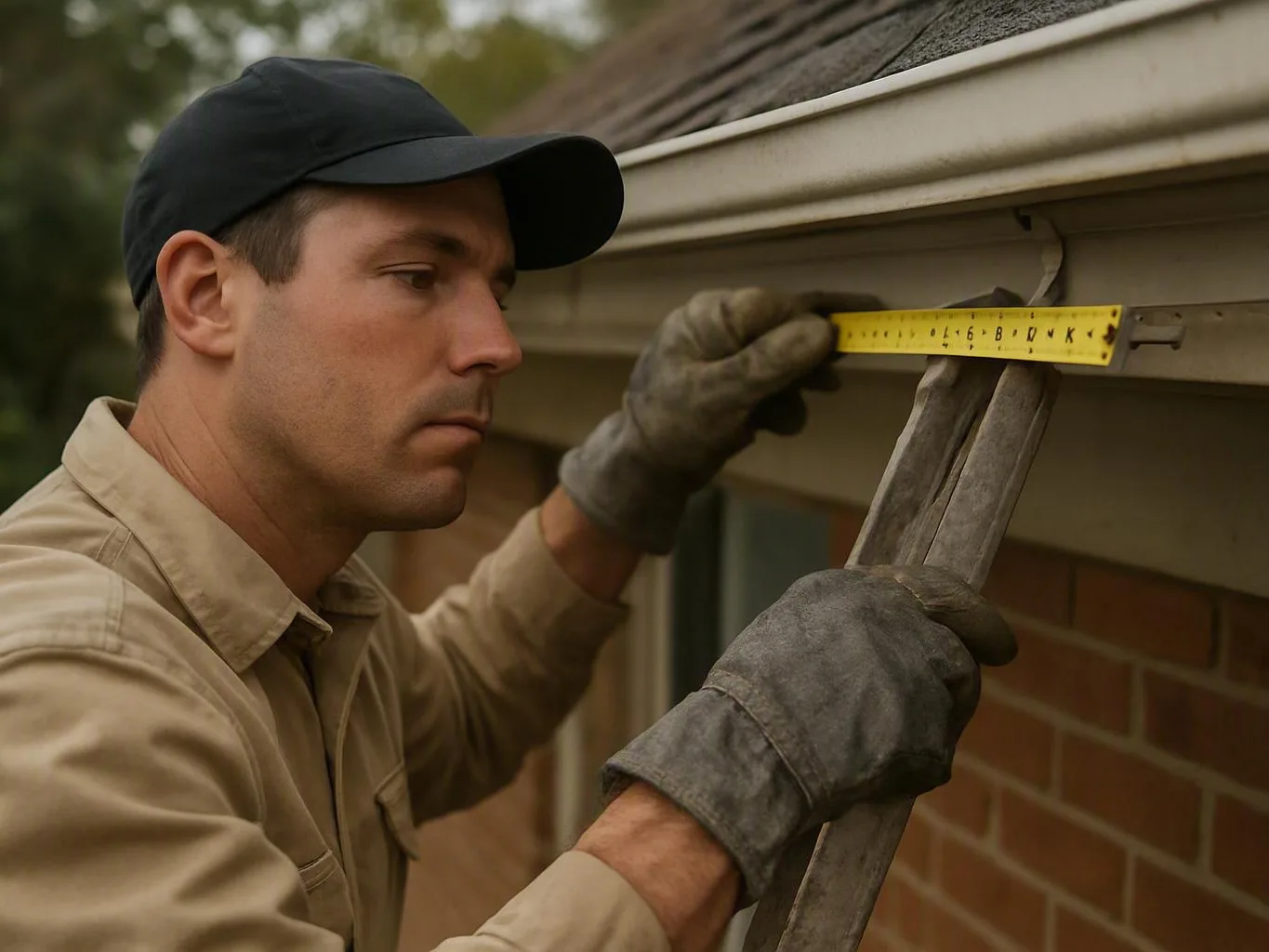
A professional gutter inspection checks the full drainage path. It starts at the roofline and ends at the downspout outlet. The inspector checks gutter condition, slope, seams, hangers, fascia, roof edges, downspouts, and drainage. They also look for clogs, leaks, and water damage. The inspector records each issue and explains the needed work. This may include cleaning, repairs, replacement, or gutter guard installation. Inspection time depends on the property, gutter design, access, and damage. A written report can help you plan the next step. It may suggest cleaning, downspout repair, partial replacement, or full gutter installation. Early action can help prevent costly water problems.
Get a Free EstimateWhat Does a Professional Gutter Inspection Include?
Professional gutter inspection includes a careful review of the full gutter system. The inspector checks channels, seams, hangers, fascia, roof edges, downspouts, outlets, and drainage. They look for clogs, leaks, sagging, poor slope, rust, gaps, and water damage. Then, they record the condition and suggest cleaning, repair, replacement, or guards.
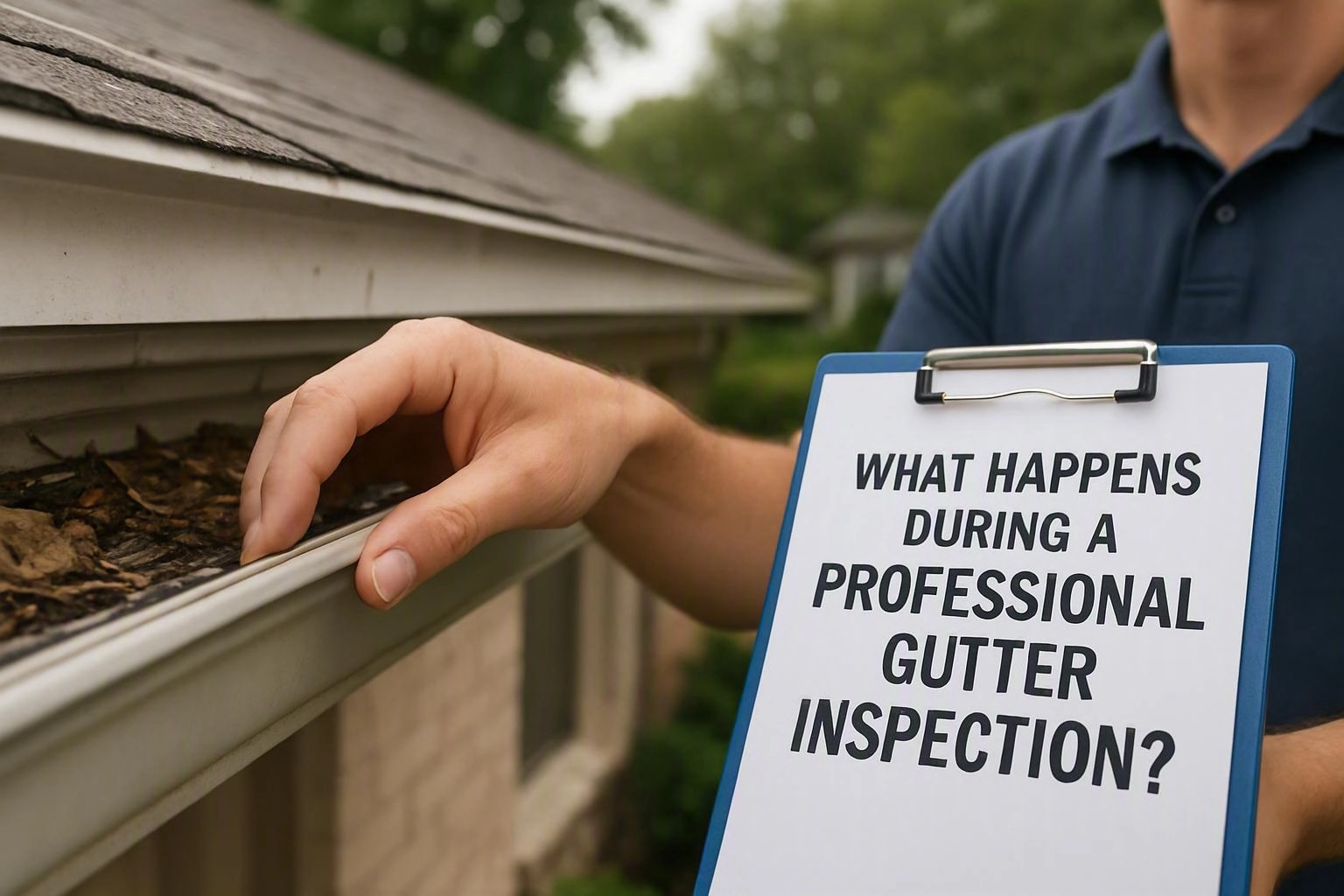
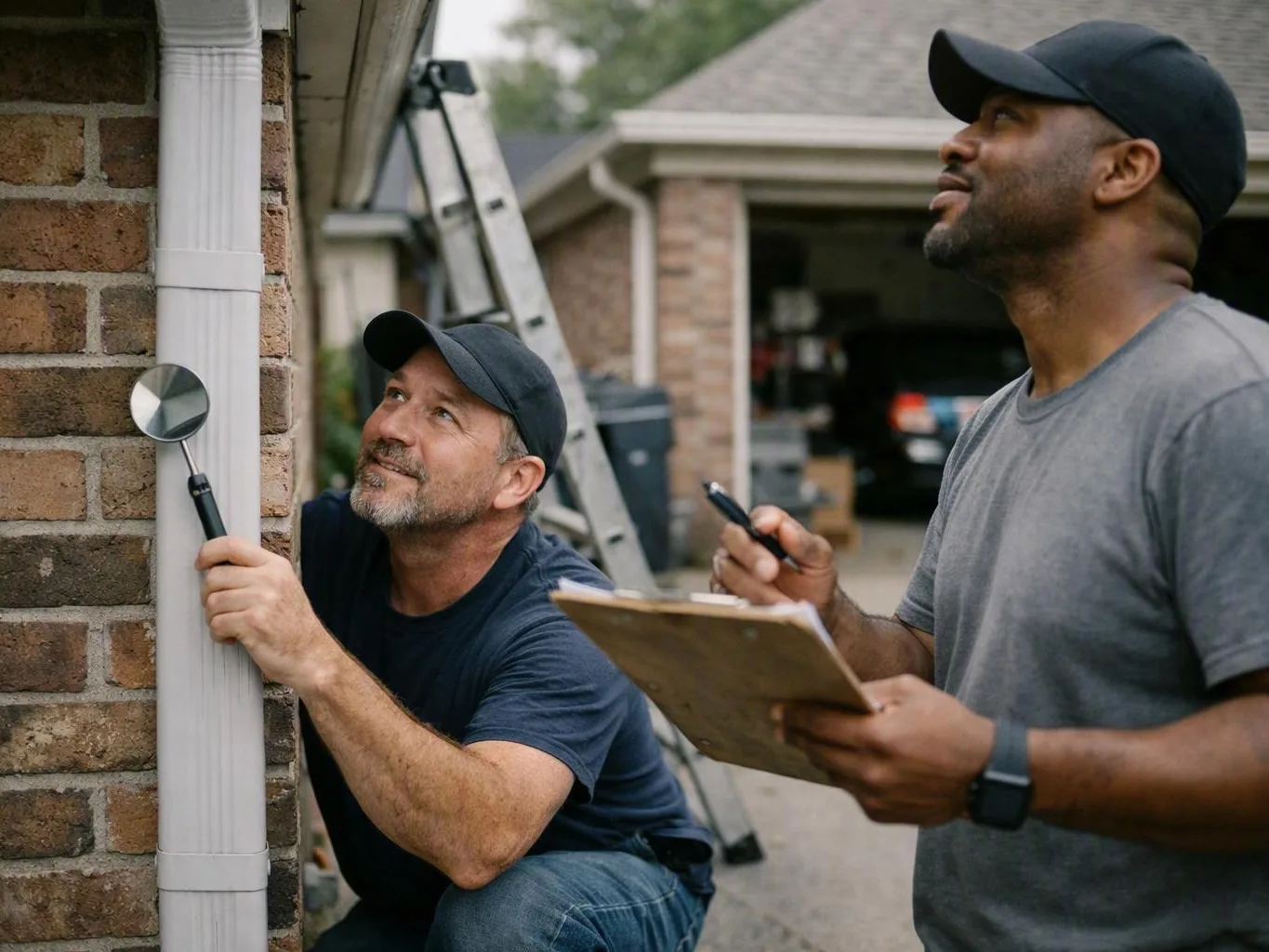
A rain gutter inspection is part of normal home care. It also checks how water moves around the outside of your home. Our team follows the full roof drainage path. We don't only check areas visible from the ground. This helps us find the source of stains and overflow.
Our crews also check nearby plants, foundation signs, and runoff direction. A small clog needs a different fix than a system problem. We explain the issue and its effect. Then, we suggest a fix that fits the gutter's condition.
How Long Does a Gutter Inspection Take?
Gutter inspection time depends on property size, roof height, layout, and access. It also depends on the number of visible problems. A small system may take 30 to 45 minutes. An average home may take 45 to 90 minutes. A large or complex property may take longer. The table shows common time ranges for a visual check.
| Property size | Typical duration | What may affect timing |
|---|---|---|
| Small | About 30–45 minutes | Simple layout and easy roof access |
| Average | About 45–90 minutes | Multiple slopes, corners, or downspouts |
| Large or complex | Longer than 90 minutes | High rooflines, extensions, limited access, or damage |
These times are common ranges, not fixed promises. Roof access and safety setup can add time. Heavy roof debris may also slow the visit. Testing a blocked outlet can take longer. A written report may need extra time after the inspection.
How Much Does a Gutter Inspection Cost?
Gutter inspection cost depends on the property, access, and gutter design. Travel can also affect the price. The cost may change if cleaning, testing, or a repair estimate is included. Some contractors include an inspection with another gutter service. Others charge a separate fee. Ask what the inspection covers. Also ask if the recommendations are listed by item.
The price should match the work provided. A ground check differs from a roofline review. It also differs from flow testing and debris removal. A written repair estimate takes more work. High, enclosed, or blocked gutters can also require extra effort.
Ask if gutter cleaning costs extra before you book. Confirm that the crew will check fascia damage. Ask if they will review drainage capacity and repair choices. A clear report can help you compare a small fix with future gutter installation or replacement.
When Should You Get Your Gutters Inspected?
Schedule a gutter inspection when water overflows or gutters sag. You should also call when gutters leak, stain walls, or pull away. Soil erosion near outlets is another warning sign. An inspection can help before seasonal maintenance or after severe weather. It also helps before selling a home or after roof work.
Heavy rain can reveal a weak gutter slope or blocked outlet. These issues may not show during dry weather. Look for washed mulch, pooling water, or splash marks. These signs may show that water isn't leaving safely.
Schedule a review before roof replacement. This helps workers plan the roof edge and drainage system. An inspection also helps before gutter guard installation. It can support seasonal care or a home sale. After wind, hail, or falling branches, an early check can find hidden damage.
Can an Inspection Tell You if Gutter Replacement Is Needed?
A gutter inspection can show if replacement makes more sense than repair. The inspector checks rust, repeated leaks, sagging, damaged fascia, and weak connections. They also check the system's size and drainage. Small problems may need repair. Major damage or poor design may call for partial or complete gutter replacement.
Repair often works when one hanger is loose. It may also work when one seam leaks. A short section with a small hole may need repair too. Downspout repair can restore water flow. This works when the channels remain strong.
Replacement becomes more likely when many sections have rust. It may also be needed when seams keep failing. Repeated sagging is another warning sign. Our team checks fascia damage, roof runoff, and drainage capacity. An undersized system may keep overflowing after repairs.
Gutter Installation can solve larger system problems. It may help when the layout, slope, or outlets are poor. The inspection report should explain each choice. It should show when repair is enough. It should also explain when replacement is the better option.
Should Gutters Be Inspected Before Installing Gutter Guards?
Gutters should be inspected before gutter guard installation. Guards can't fix sagging channels, poor slope, damaged seams, or blocked downspouts. They also can't fix weak drainage. An inspection confirms that the system is sound. It finds repairs needed before installation. It also helps match the guard to the roof and gutter.
Roof debris can affect the guard choice and cleaning plan. Pine needles, leaves, and roof grit can build up in gutters. The installer should check water flow at every outlet. They should also check downspout capacity. Guards block debris, but they don't strengthen gutters or fascia.
Guard fit depends on gutter shape and roof edge space. It also depends on the fastening method. Badly rusted gutters should be repaired or replaced first. The same applies when the slope is wrong. This check is often called a gutter guard readiness inspection.
When planning Gutter Installation and Gutter Guards together, ask for one drainage plan. This can keep a new cover from hiding an old problem.
Questions About Gutter Installation and Gutter Guards
How Much Does a Gutter Inspection Cost?
The cost depends on property size, access, layout, travel, and included services. Cleaning, testing, or a repair estimate may affect the price. Some providers include the check with another service. Ask for the service details before booking.
When Should I Get My Gutters Inspected?
Arrange an inspection when gutters overflow, sag, leak, detach, or stain walls. Soil erosion is another warning sign. An inspection also helps after storms, before roof work, before seasonal care, or before selling a home.
Can a Gutter Inspection Tell Me if Replacement Is Needed?
Yes. The review compares small defects with larger system problems. These problems include rust, poor slope, repeated leaks, low drainage capacity, and fascia damage. Small issues may need repair. Broad damage may require partial or full replacement.
Should Gutters Be Inspected Before Installing Gutter Guards?
Yes. The crew should check channels, slope, seams, roof debris, water flow, guard fit, and downspout capacity. Complete repairs or replacement first. This keeps the new guards from hiding a drainage problem.
Our crews can explain the inspection report and help plan the next step. We can help with cleaning, gutter repair, downspout repair, replacement, or an upgrade. For an assessment for your roof drainage needs, contact us through our contact page.
Related Resources
How Much Does Gutter Installation Cost in Memphis?
Memphis gutter installation cost
What It CostsHow Much Do Downspout Installation and Extensions Cost?
downspout installation and extension cost
Compared ToShould You Repair or Replace Your Gutters?
gutter repair vs replacement
Compared ToWhich Gutter Guards Work Best for Leaves and Pine Needles?
best gutter guards for pine needles and leaves