Which Gutter Guards Work Best for Leaves and Pine Needles?
Micro-mesh gutter guards often work best for pine needles and leaves. Their fine steel screens block small debris and let rainwater pass. Reverse-curve guards can handle large leaves and heavy rain. Their open edges may need more care and careful setup. No gutter guard stops all cleaning. Debris can collect on top or near downspouts. The best choice depends on your roof, trees, rain, gutters, and setup. Compare the filter, water flow, care needs, strength, and total cost first.
Get a Free Estimate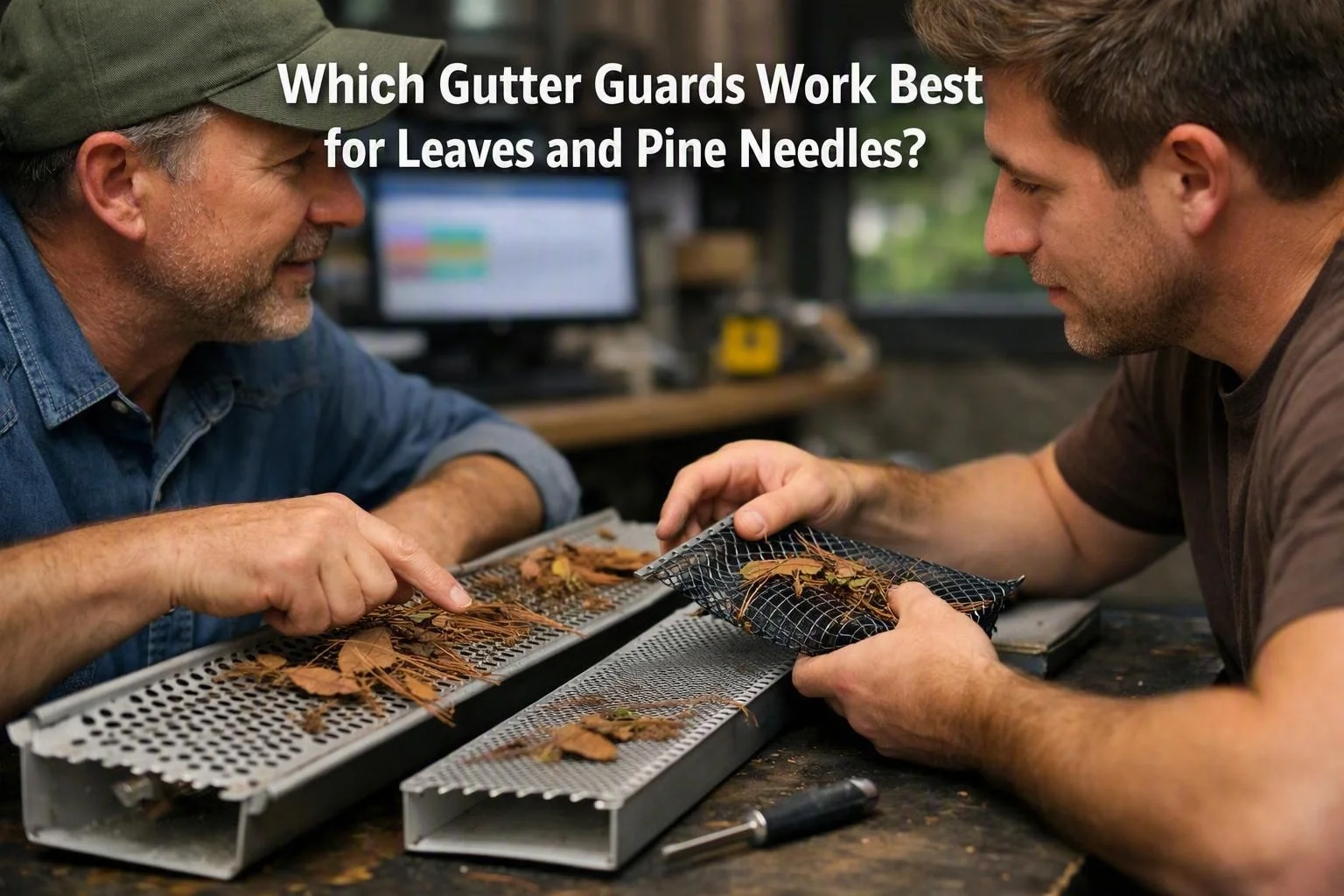
What Type of Gutter Guard Is Best for Leaves and Pine Needles?
Micro-mesh gutter guards are often the best choice for pine needles. Their fine screens block small debris and let rainwater in. Reverse-curve guards can handle large leaves well. Results depend on roof pitch, rain levels, setup, and guard care.
Homes under evergreen trees face a different problem. Pine needles are thin and can pass through wide openings. Oak leaves are larger and may rest on top until wind or rain moves them.
A micro-mesh gutter guard uses a fine stainless-steel screen. It helps block pine needles, seed pods, and small leaf pieces. The screen still needs care. Pollen, roof grit, and moss can cover it.
A reverse-curve gutter guard uses surface tension. Rainwater follows the curve into the gutter. Large leaves fall away. Small debris may still collect near the gutter opening.
Your roof and gutter setup also matter. Check the shingles, gutter size, fascia, and downspout path. A good filter cannot stop overflow from a blocked downspout.
How Do the Main Gutter Guard Options Compare?
Micro-mesh and reverse-curve guards differ in key ways. They differ in filtering, water flow, care, and setup. Micro-mesh often blocks pine needles better. Reverse-curve guards may suit homes with large leaves. Cost and work time depend on your gutters, roof, and guard design.
| Factor | Micro-mesh | Reverse-curve |
|---|---|---|
| Gutter guard cost | Often higher due to the fine screen and frame | Depends on the curve, material, and fasteners |
| Installation timeline | Often one to two workdays for a typical home | Often similar, but roof details may add time |
| Maintenance | Brush the screen and check it from time to time | Clear the top and check the gutter opening |
| Best-use case | Pine needles, seed pods, and small leaf pieces | Large oak leaves when water flow is strong |
Foam gutter inserts are another choice. They can hold water and fine debris. Look at the full rain system, not just the cover. The best choice matches your roof, trees, and rain flow.
Micro-Mesh Gutter Guards: Pros and Cons for Pine Needles
Micro-mesh gutter guards use a fine screen. The screen blocks pine needles, seed pods, and small leaf pieces. It can reduce buildup inside the gutter. Debris may still gather on top. Pollen or ice can block the screen. The guard also needs a firm fit at the roof and fascia.
Homes near evergreen trees often need fine filtering. Small openings can block more needles than wide slots. The screen also limits roof grit inside the gutter. Proper Gutter Guard Installation still matters. Gaps at the roof edge can let needles enter.
Pros include:
Cons include:
These guards reduce gutter cleaning. They don't remove the need for it. A seasonal check can find damage, loose fasteners, or thick debris.
Reverse-Curve Gutter Guards: Pros and Cons for Oak Leaves
Reverse-curve gutter guards guide rain around a curved edge. Water enters the gutter while large leaves fall away. These guards may suit homes near broadleaf trees. Small debris may enter the opening. Heavy rain and dry leaves can also reduce their results.
This design uses surface tension instead of a full screen. Oak leaves may slide off the top. Wet leaves can cover the curve and slow water flow. Roof pitch matters too. Fast runoff may pass over the gutter opening.
Pros include:
Cons include:
Reverse-curve systems may suit homes with broadleaf trees. Check them after storms. The opening, end caps, and downspout still need care.
Do Gutter Guards Work in Heavy Rain?
Gutter guards can work in heavy rain with enough water-flow space. They also need the right slope and firm fasteners. Downspouts must be clear and large enough. Roof size, gutter size, and rain levels affect overflow risk.
Water from a large or steep roof can move very fast. A small screen may not pass it quickly enough. A clean screen can still cause overflow. Proper gutter slope and clear downspouts help move water away.
Before setup, we check the gutters, outlets, roof pitch, and downspouts. Don't cover a sagging gutter or blocked outlet. Repairs may need to come first.
Watch for water spilling over the front edge during storms. Also look for water behind the gutter or near the building. These signs may point to a blocked screen or downspout.
Do Gutter Guards Eliminate Gutter Cleaning?
Gutter guards reduce debris inside gutters. They don't eliminate gutter cleaning. Leaves, pine needles, pollen, roof grit, and moss can collect on top. They can also gather near end caps and downspouts. Regular checks and care still protect water flow.
Gutter guard cleaning focuses on the top, seams, corners, and end caps. Fine debris can form a wet layer. That layer can slow water entry. Gentle brushing is often safer for fine mesh.
Downspout flushing matters too. Debris can pass through a guard or enter through joints. A blocked downspout can cause backup and overflow during heavy rain.
Our team can include the guard, gutter, and downspout in seasonal care. This plan supports the full drainage path. It doesn't treat the cover as a stand-alone fix.
How Should You Choose and Maintain a Gutter Guard System?
Choose a gutter guard that fits your roof and trees. Match the filter, water flow, fasteners, and care needs. Check the gutters first. Confirm downspout size and roof fit. Plan regular cleaning after setup.
Gutter Installation and Gutter Guards work together in one roof drainage plan. Some homes need larger gutters or another downspout. That change may help more than a new cover.
All Pro Roofing and Gutters can review these factors before making a suggestion. Homeowners seeking Gutter Guard Installation in Memphis should review their roof, trees, and drainage layout.
Questions About Gutter Installation and Gutter Guards
What Are the Best Gutter Guards for Pine Needles?
Micro-mesh guards are usually best for pine needles. Their fine screens block narrow debris and let rainwater pass. They still need cleaning near seams, edges, and downspouts.
Which Gutter Guards Work Best for Oak Leaves?
Reverse-curve guards can work well for oak leaves. Large leaves may slide off the curved surface. Micro-mesh can help with small pieces, seed pods, and mixed debris.
Do Gutter Guards Work in Heavy Rain?
They can work in heavy rain with enough flow space. Gutters also need proper slope, firm fasteners, and clear downspouts. Roof pitch, gutter size, and rain levels affect overflow risk.
What Type of Gutter Guard Is Best?
The best type depends on debris, roof pitch, gutters, rain, and downspouts. Micro-mesh suits pine needles and fine debris. Reverse-curve designs may suit homes with large leaves.
Do Gutter Guards Eliminate Gutter Cleaning?
No. Gutter guards reduce debris inside the gutter. Leaves, pine needles, pollen, and roof grit can collect on top. Seasonal checks, brushing, flushing, and repairs are still needed.
Our team can compare filter needs, water flow, and care needs. We can also check your current roof drainage system.
Related Resources
How Much Does Gutter Installation Cost in Memphis?
Memphis gutter installation cost
How It WorksWhat Happens During a Professional Gutter Inspection?
professional gutter inspection process
Who It's ForGutter Guard Types: How to Choose the Best Fit for Your Home
types of gutter guards
Who It's ForAre Gutter Guards Worth It? Benefits, Limits, and Maintenance
are gutter guards worth it