Why Your Gutters Are Overflowing and How to Fix the Problem
Gutters often overflow because of clogs, blocked downspouts, poor slope, or loose sections. Heavy rain can also send more water than the system can carry. Clean gutters may still overflow if the system is too small or a downspout is blocked. Overflow in one spot may point to a clog, sag, leak, or roof valley. Check the gutter and downspout first. Fix the slope and alignment. Replace damaged parts when cleaning does not solve the issue.
Get a Free Estimate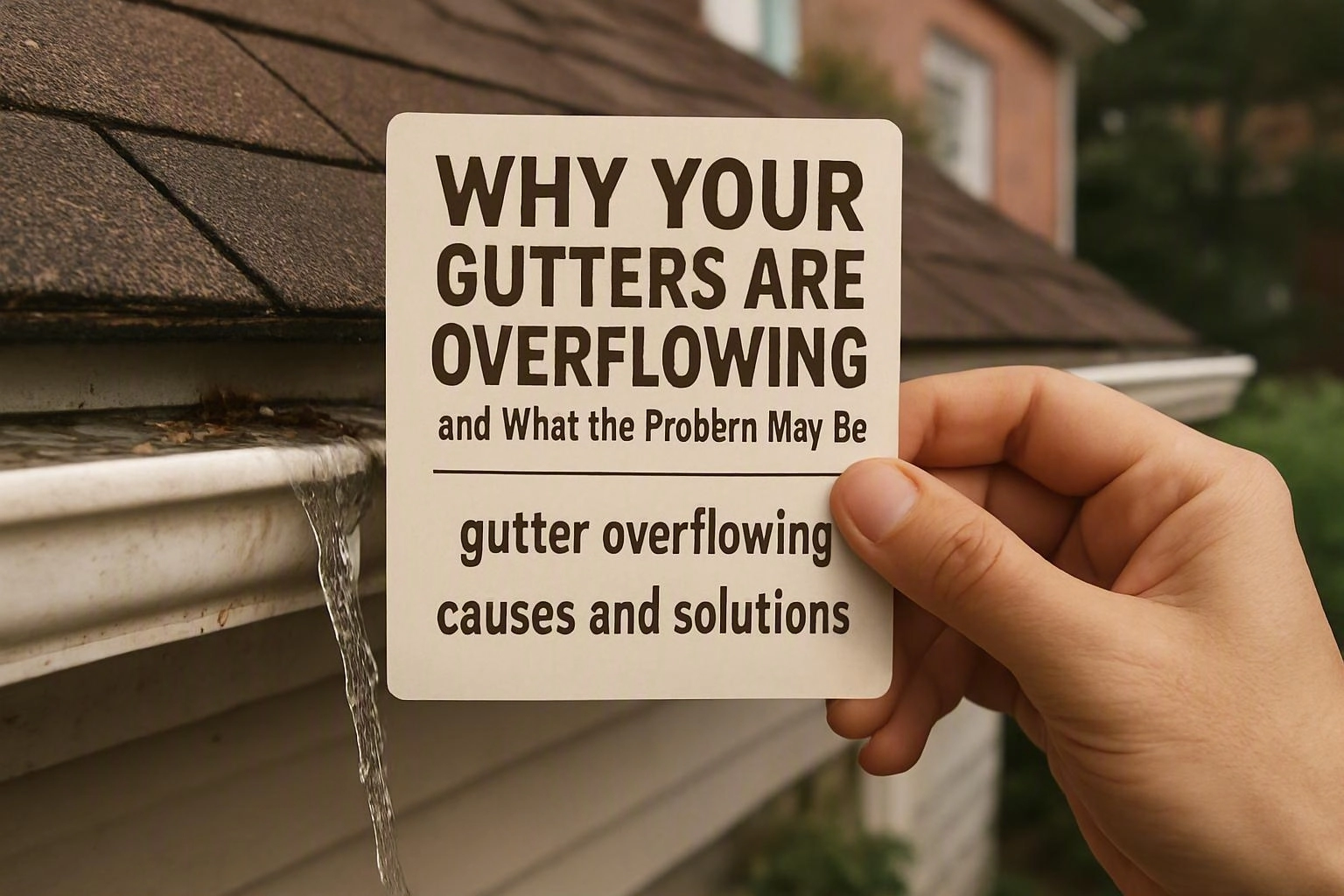
Why Are My Gutters Overflowing?
Gutter overflow happens when rain enters faster than the system can drain it. Common causes include clogs, blocked downspouts, poor slope, sagging sections, damaged seams, and small gutters. Roof valleys can also send too much water to one spot. The best fix depends on the cause.
Rain should move through the gutter and into a downspout. It should then flow away from the home. Water rises and spills out when it stops along this path. Leaves can cause the problem. Poor design or damage can cause it too.
Roof size and pitch affect water flow. Large or steep roofs send more water into the gutter. Roof valleys bring water together at one point. That spot may need a larger gutter or another downspout.
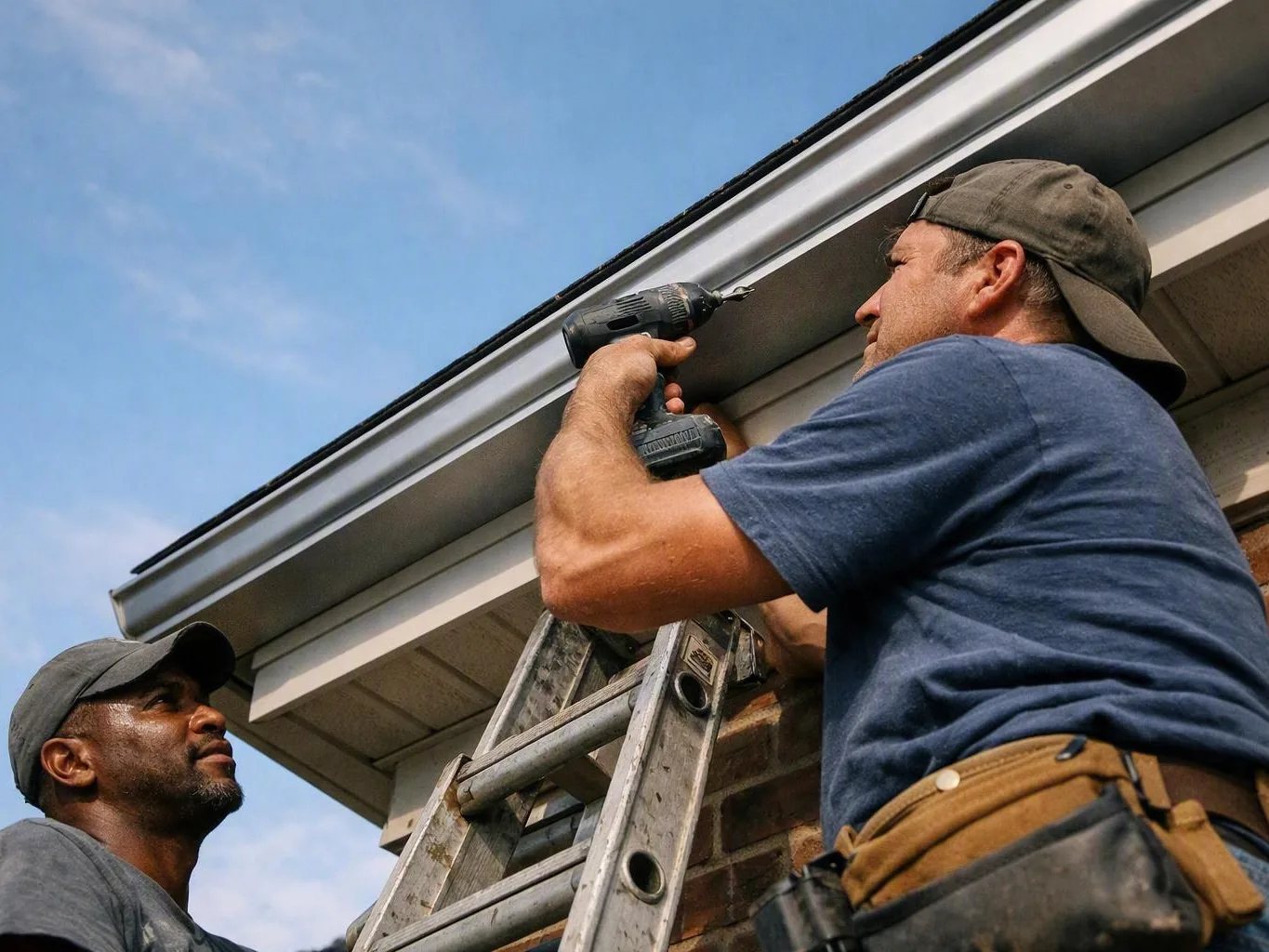
During a gutter inspection, we check the channel, hangers, seams, outlets, elbows, and discharge area. Gutter Installation includes more than attaching metal to the fascia. It also includes gutter size, slope, layout, and downspout spacing.
Signs Your Gutter System Has a Drainage Problem
Water spilling over the edge often signals a drainage problem. Other signs include stains, wet soil, and sagging gutters. These signs show that water is not following the right path. Early repairs can help protect the roof, walls, and foundation.
These signs may not show the exact cause. Trees can drop leaves, seeds, and twigs into the system. Debris may also hide on hard-to-reach rooflines. A flow test can help find the failed part.
Common Causes of Gutter Overflow
The main gutter overflow causes include debris, clogged downspouts, poor slope, sagging sections, damaged seams, and small gutters. Roof valleys can also focus too much water in one place. A visual check can show where water stops. A flow test can confirm the cause.
A repair may work when the gutter is still in good shape. This includes clearing a clog or fixing a hanger. Larger gutters or added downspouts may help when the design is too small. Replacement may cost less over time when damage affects many sections.
Can a Clogged Downspout Cause Gutter Overflow?
Yes. A clogged downspout can back up water and cause gutter overflow. The clog may sit in an elbow, outlet, or underground drain. It may not be visible from the ground.
We first check if water leaves the bottom during a flow test. If it does not, we may need to disconnect and clear the downspout. Underground lines can fill with soil, roots, or debris. Clearing the top opening won't fix a clog farther down.
Don't climb an unsafe ladder or force sharp tools into a hidden pipe. A safe inspection can find the clog. It can also show if you need downspout repair or drain clearing.
Why Gutters Overflow Even When They Look Clean?
Clean gutters can still overflow when a downspout, elbow, outlet, or drain is blocked. Poor slope and sagging can also cause trouble. A blocked gutter guard may slow the flow. Roof valleys can send extra water to one area. The full drainage path needs a flow test.
A gutter guard can reduce cleaning. It won't make the system maintenance-free. Seeds, roof grit, and wet leaves can collect on or below the cover. Dirty or poorly fitted guards may also slow water during hard rain.
Gutter size is another hidden issue. A narrow channel may handle light rain but fail during a storm. Steep roofs move water faster. Roof valleys act like funnels. They may need a wider channel, a nearby outlet, or a diverter.
Our team checks slope, hangers, seams, guards, downspout flow, and the final outlet. We look at the full system before choosing a fix. Homeowners who need Gutter Installation and Gutter Guards can get help choosing the right setup.
Why Gutters Overflow During Heavy Rain?
Heavy rain can overwhelm gutters when water arrives faster than the system can drain it. Roof valleys can also send water to one spot. A partial clog, small gutter, or few downspouts can make the problem worse.
Light rain may not reveal a size problem. Storms send a fast rush of water from large roofs. Steep roofs increase the flow speed. Valleys bring water together before it reaches the gutter.
Many homes use downspouts about 30 to 40 feet apart. The right spacing depends on roof size, pitch, local rain, and gutter type. This range is only a guide.
We can improve flow by clearing clogs or adding an outlet. Larger downspouts may also help. A diverter can guide water away from a roof valley.
How to Prevent Gutter Overflow and Choose the Right Solution?
Preventing gutter overflow starts with clear gutters and downspouts. The system also needs the right slope and strong hangers. Downspouts should send water away from the foundation. Gutter size should match the roof and rainfall.
Roof size and pitch should guide every gutter choice. A simple roof needs a different layout than a steep roof with valleys. High rooflines may also need a safer cleaning plan.
We suggest repair when the system is the right size. Added capacity works better when storms bring too much water. New gutter installation may make sense when poor slope or damage affects most of the system.
For homeowners who need Gutter Inspection in Memphis, our team can check the full drainage path. We follow water from the roof to the final outlet. This helps protect fascia, siding, landscaping, and the foundation.
What to Check When Only One Gutter Section Overflows?
One overflowing section often points to a local problem. Compare it with nearby sections during a flow test. Then check the roof area above it and the next downspout connection.
| What you see | Likely cause | What to check |
|---|---|---|
| Overflow between hangers | Localized gutter clog or gutter sag | Debris, low spots, and hanger security |
| Leak at a joint | Open gutter seam | Separated sealant and joint alignment |
| Overflow below a roof valley | Concentrated roof runoff | Valley direction and gutter capacity |
| Water near the outlet | Downspout connection or blockage | Outlet opening, elbow, and pipe flow |
A local gutter repair may fix the issue when the rest of the system is sound. If overflow returns after cleaning, check the roof drainage and gutter size.
Questions About Gutter Installation and Gutter Guards
Why Are My Gutters Overflowing?
Common causes include clogs, blocked downspouts, poor slope, sagging, loose hangers, and damaged seams. Small gutters and roof valleys can also cause overflow. Check the full drainage path, not just the visible gutter.
Why Do Gutters Overflow Even When They Are Clean?
A hidden clog may sit inside the downspout, elbow, outlet, or drain. Poor slope, low capacity, sagging, a blocked guard, or heavy valley runoff can also cause overflow.
Why Do Gutters Overflow Only During Heavy Rain?
Heavy rain can arrive faster than a blocked, small, or poorly spaced system can drain it. Large roofs, steep sections, and valleys can focus extra water in one place.
Why Is Water Overflowing in Only One Section of the Gutter?
One-section overflow often comes from a clog, seam, sag, loose hanger, roof valley, or downspout connection. Check where water stops and compare that spot with nearby sections.
Can a Clogged Downspout Cause Gutter Overflow?
Yes. A clogged downspout stops water from leaving the gutter. Water then backs up and spills over. The clog may be in the pipe, elbow, outlet, or underground drain.
If gutters still overflow after cleaning, a full inspection can find the cause. The right fix may include repair, added drainage, or replacement. We can help protect your roof and foundation.
/a>Related Resources
How Much Does Gutter Installation Cost in Memphis?
Memphis gutter installation cost
What It CostsHow Much Do Downspout Installation and Extensions Cost?
downspout installation and extension cost
Compared ToShould You Repair or Replace Your Gutters?
gutter repair vs replacement
How It WorksWhat Happens During a Professional Gutter Inspection?
professional gutter inspection process