
What is Miter Joints?
Miter Joints are angled connections where two gutter sections meet at a corner, usually cut at about 45 degrees to form a clean turn. Installers seal and fasten these connections so water stays inside the gutter channel. Properly built miter joints support drainage, limit leaks, and help the gutter line follow the roof edge.
Quick Facts About Miter Joints
Category
Gutter connection
Used for
Inside and outside gutter corners
Typical angle
About 45 degrees per section
Common confusion
A miter joint is not the same as a gutter end cap
Also called
Gutter miter, Mitered gutter corner
Often discussed with
Gutter Installation, Gutter Replacement
Key Takeaways About Miter Joints
- Miter joints connect gutter sections at inside or outside roof corners.
- Most corner cuts use matching angles that total about 90 degrees.
- Sealant and mechanical fasteners help prevent leaks at each joint.
- Poor alignment can create standing water, drips, and visible sagging.
- Joint design should match the gutter material, profile, and corner shape.
Understanding Miter Joints
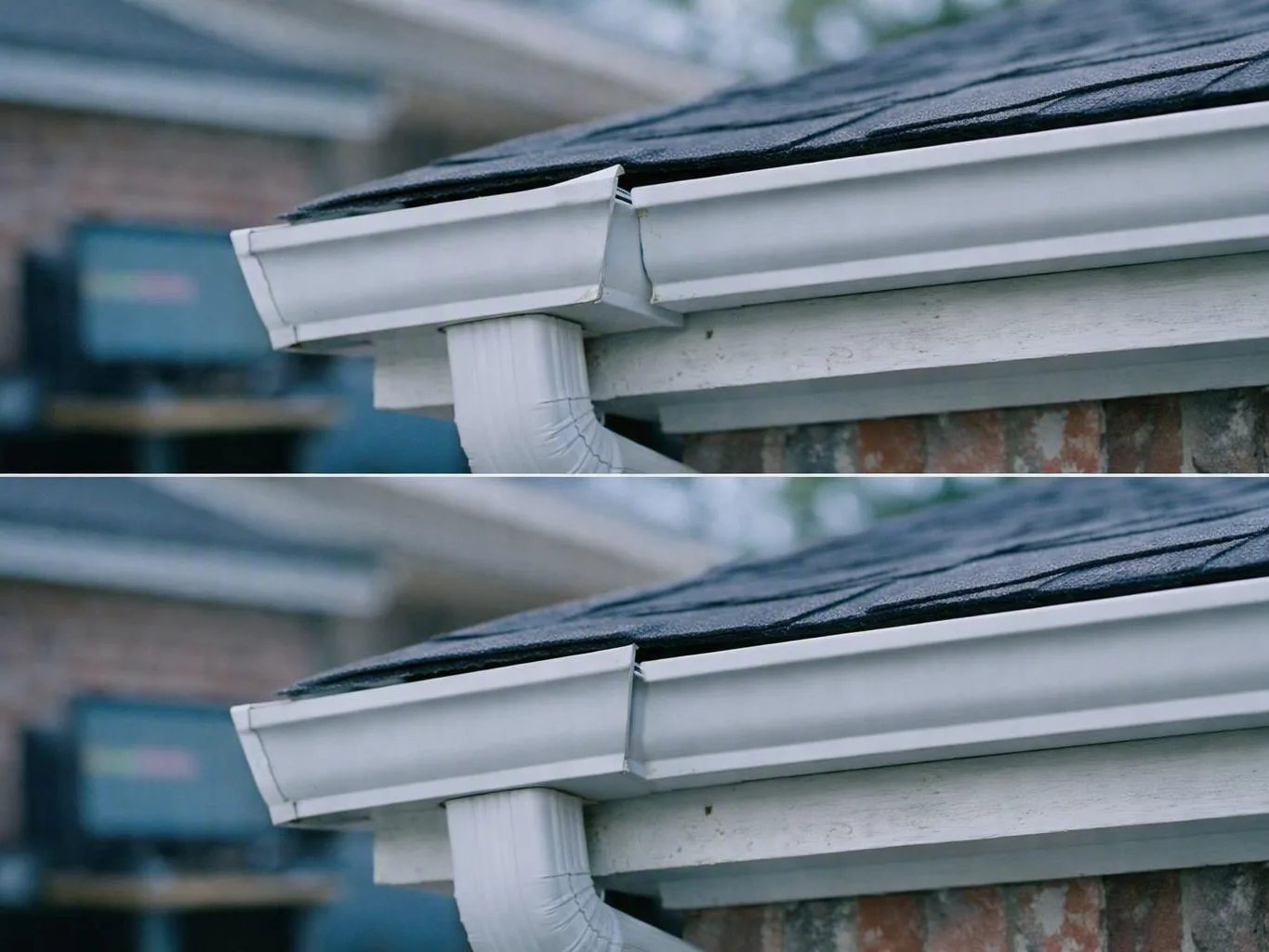
Miter joints are angled connections between two pieces of gutter at a roof corner. The cuts usually meet at an angle that creates the corner direction. An outside corner projects away from the building. An inside corner turns toward it. The joint creates a continuous path for rainwater around the roof edge.
Related glossary terms: Gutter Slope, Gutter Hangers, Fascia Board.
Gutter installers make these connections from separate gutter sections. They also use factory-made corner pieces or formed metal parts. The joint must match the gutter profile. This profile may be K-style gutters, half-round gutters, or a custom box shape. A finished connection normally includes sealant and fasteners. It also includes an aligned channel that doesn't block water flow.
How Miter Joints Works, Is Measured, or Is Used?
A typical corner uses two pieces cut to matching angles. For a square corner, each piece often receives a 45-degree cut. The cut may change when the corner isn't close to 90 degrees. The installer measures the roof corner and marks the gutter. They cut the material with a suitable tool. They test-fit the pieces before sealing the connection.
After the pieces fit, the installer joins the sections with compatible gutter sealant. They also use corrosion-resistant fasteners. The connection should keep the gutter bottom level across the corner. It should preserve the planned gutter slope toward the downspout. At an inside corner, the installer checks the roof runoff. The runoff may strike the joint with unusual force.
Material affects the joint method. Aluminum gutters commonly use sealant and hidden or exterior fasteners. Copper systems may use soldered or mechanical connections. These methods suit copper's movement and appearance. Steel, vinyl, and painted metal each need special products. These products must bond without damaging the finish. They must also prevent early corrosion.
Why Miter Joints Matters?
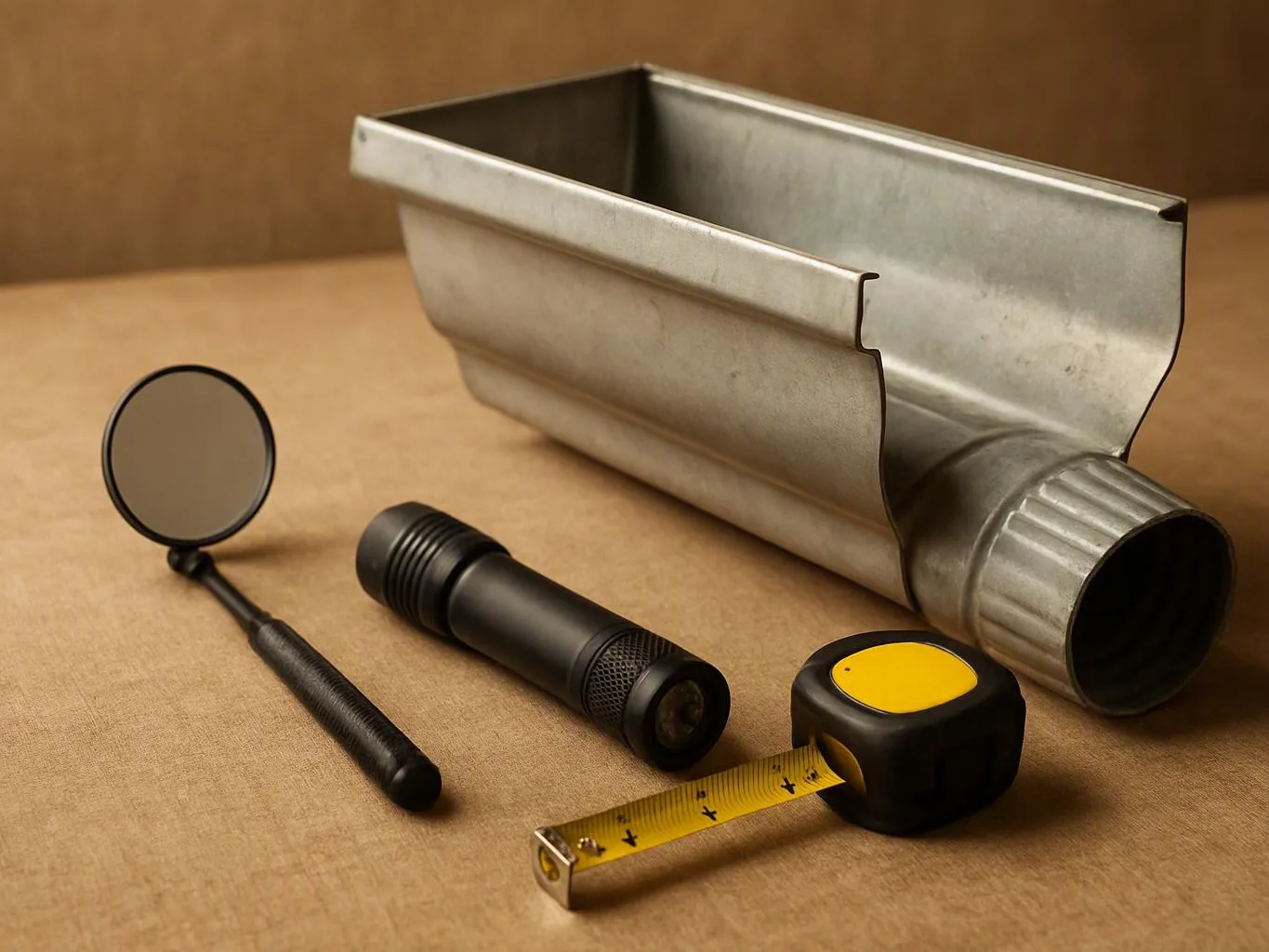
A sound corner joint prevents water from escaping at a weak gutter point. Leaks at a corner can wet the fascia boardsiding, trim, soil, or foundation area below. Water can also wash out landscaping. This happens when runoff flows behind the gutter instead of into its channel.
Joint quality affects more than leak control. A corner that sits too high, low, or out of line can interrupt drainage. It can also collect debris. Correct cuts, firm fastening, and full sealant coverage help preserve the gutter's shape. They also help during temperature changes and seasonal movement.
When Miter Joints Matters Most?
Miter joints need close attention during new gutter installation, gutter replacement, and repairs near roof corners. They matter more on roofs with several corners, long runs, steep sections, or valleys. These features can send a lot of water toward one location. Inspect a corner when you see drips during rain, stained fascia, peeling paint, loose fasteners, or split sealant.
Use a careful evaluation before resealing an old joint. Check whether the gutter remains firmly attached. Check whether the corner has pulled apart. Check whether the roof edge or fascia has shifted. Replacing a damaged corner may provide a longer-lasting repair. This works better than adding sealant over a joint that no longer lines up.
How to Evaluate Miter Joints?
- Check that the two gutter sections meet evenly without an open gap or sharp step.
- Inspect sealant for cracks, peeling, shrinkage, or visible gaps along the seam.
- Confirm that water flows through the corner without pooling during a hose test.
- Look for damp fascia, staining, soil erosion, or drips beneath the joint.
- Verify that fasteners are secure and compatible with the gutter metal.
Related Concepts Compared
Miter Joints vs. Gutter Seam
A gutter seam joins sections along a straight run or at another connection point. A miter joint specifically forms an angled corner.
Miter Joints vs. Gutter End Cap
An end cap closes the open end of a gutter run. It does not connect two gutter sections around a corner.
Miter Joints vs. Gutter Corner
A gutter corner is the finished change in direction. A miter joint is the angled connection method used to create that corner.
Miter Joints vs. Gutter Apron
A gutter apron directs roof-edge runoff into the gutter. It supports water entry but does not create the corner connection.
Expert Note
A corner can look sealed and still leak if the gutter pieces are misaligned or the fascia has moved. Inspect the joint's shape and attachment before applying new sealant. Sealant works best as part of a sound connection, not as a substitute for one.
Common Mistakes or Myths About Miter Joints
- Treating a cracked sealant bead as the only problem when the corner has separated.
- Cutting both gutter sections without measuring the actual roof corner.
- Leaving the joint higher than the adjoining gutter runs.
- Using sealant that is incompatible with the gutter material or finish.
- Ignoring leaks behind the joint that have already damaged the fascia.
Miter Joints in Practice: A Real-World Example
A two-story home has an outside roof corner where two aluminum gutter runs meet. The installer measures the corner, cuts each section to fit, seals the seam, and fastens the joint. A hose test confirms that water turns the corner without dripping behind the gutter.
Sources & Further Reading on Miter Joints
Related Services
Related Terms
Gutter Slope
Gutter Slope is the slight angle that directs water through a gutter toward a downspout. Installers…
Gutter Hangers
Gutter Hangers are hardware pieces that attach a rain gutter to a building’s fascia, rafter tails…
Fascia Board
Fascia Board is a long, straight board attached along the lower edge of a roof, where…
Gutter Apron
Gutter Apron is a strip of metal flashing installed beneath roof shingles and behind the back…
All Pro Roofing and Gutters
Have Questions About Miter Joints?
Contact All Pro Roofing and Gutters for practical guidance on Miter Joints and related gutter installation and gutter guards work in Memphis.