
What is a Scupper?
Scupper is an opening that carries water through a roof edge, parapet wall, or building wall and discharges it outside. A scupper may drain directly onto a lower roof or connect to a downspout, conductor head, or drainage pipe. Scuppers commonly serve low-slope roofs where standard eaves gutters can't collect runoff effectively.
Quick Facts About Scupper
Category
Roof and stormwater drainage component
Used for
Moving roof runoff through walls or roof edges
Common confusion
A scupper is not the same as a gutter or downspout
Also called
Roof scupper, Wall scupper
Often discussed with
Gutter Installation, Downspout Installation
Key Takeaways About Scupper
- Scuppers drain water through roof edges or parapet walls.
- A scupper may discharge freely or connect to a downspout.
- Proper sizing and slope help prevent ponding, leaks, and wall staining.
- Scuppers differ from gutters because they pass through a wall or roof edge.
- Screens and flashing can reduce debris entry and water damage.
Understanding Scupper
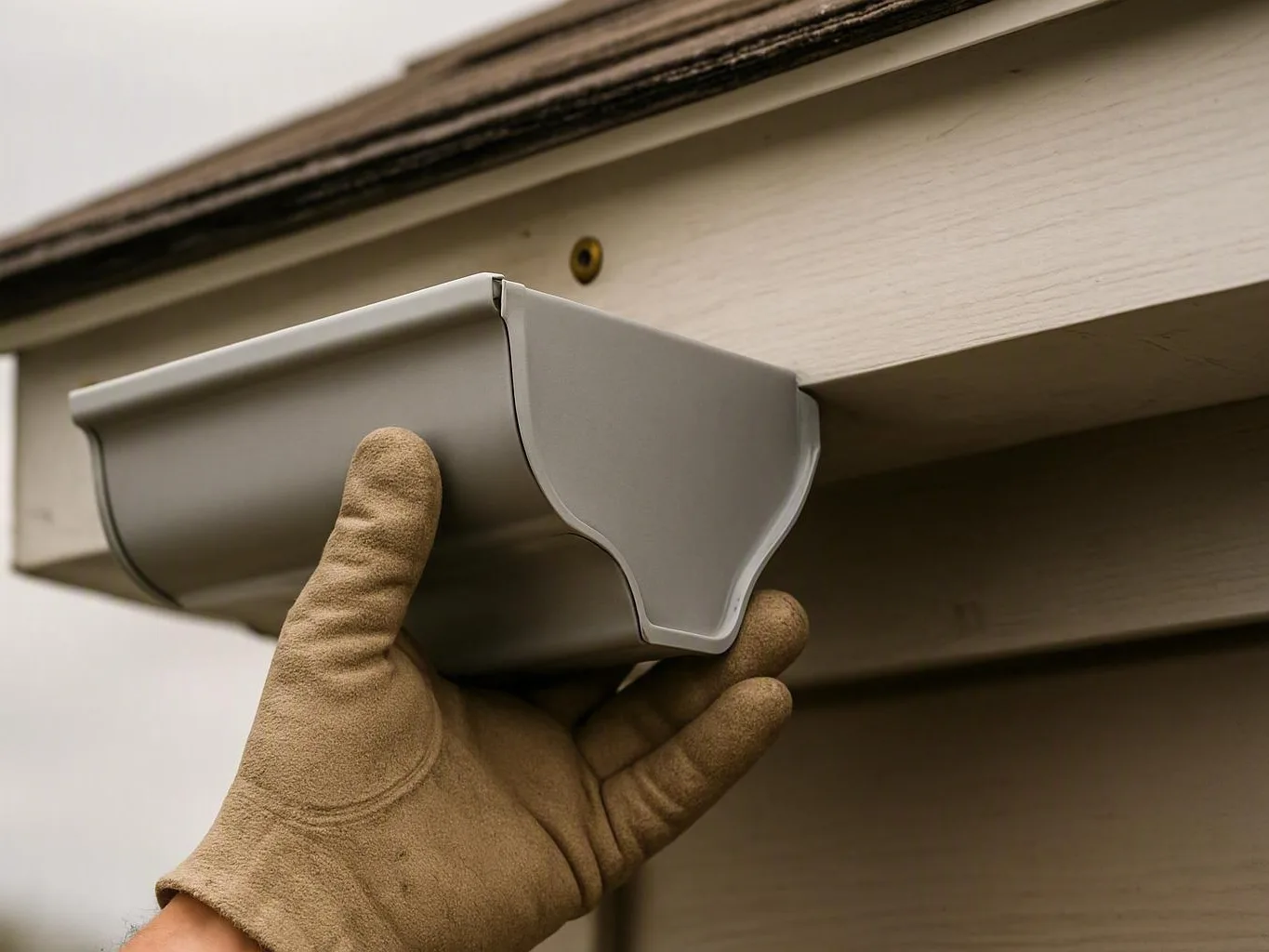
Scupper is a drainage opening through a roof edge, parapet wall, or exterior wall. Rainwater flows through it and exits the building. This keeps water from collecting on the roof surface. A scupper may end in an open discharge. It may connect to a conductor head, downspout, or drainpipe.
Related glossary terms: Downspout, Flashing, Gutter Apron.
Scuppers are common on low-slope roofs and buildings with parapets. These roofs may not have a wide, exposed eave. A conventional gutter can't hang there. A properly built scupper includes a framed opening and waterproof flashing. It also includes a strong outlet sleeve or lining. The assembly must keep water away from the wall cavity and roof structure.
How Scupper Works, Is Measured, or Is Used?
Rainwater travels across the roof toward the scupper. The roof has a designed slope. The opening passes water through the parapet or edge. It then releases water beyond the exterior wall. Some systems use a conductor head to receive water from the opening. The conductor head directs water into a downspout. Other systems discharge onto a lower roof or splash surface.
Designers size a scupper by using several factors. These include roof area, rainfall intensity, roof slope, and outlet number. The drainage path needs enough capacity for intense storms. It shouldn't create a narrow obstruction at the outlet. Installers also check the opening height, width, and edge condition. They check the connection to flashing as well. A scupper that sits too high can leave standing water. A scupper that sits too low can weaken the edge. It can also interfere with roof construction.
During installation, workers frame the opening before finishing waterproofing. Membrane or metal flashing extends around the opening. It laps in the direction of water flow. The installer then seals joints. The installer confirms that water exits beyond the wall, trim, and foundation. A screen or guard may stop leaves and larger debris from blocking the outlet.
Why Scupper Matters?
A scupper protects the roof and wall. It gives runoff a planned exit. Without enough drainage, water can pond on a low-slope roof. This can increase membrane damage, leaks, freeze damage, or stress. Water that spills against a wall can stain masonry. It can damage siding and soak soil near the foundation.
Scupper design affects maintenance and construction. An outlet that discharges onto a lower roof needs a strong receiving surface. It also needs a clear drainage path. An outlet connected to a downspout needs secure joints. It needs enough capacity for the incoming flow. The outlet should stay easy to reach. This lets you remove leaves, sediment, and other blockages.
When Scupper Matters Most?
Scuppers matter most on commercial buildings, row homes, and additions. They also matter on other structures with flat or low-slope roofs. They help when a roof drains toward a parapet. They help when a gutter can't be installed at the edge. During a roof replacement, review the drainage layout first. New membrane, coping, or edge metal may cover existing openings.
Inspect a scupper after heavy rain, roof work, or wall repairs. Look for rust, cracked sealant, loose metal, and blocked screens. Also look for water marks and staining below the outlet. In Memphis, heavy thunderstorms can send much water across a roof quickly. A clean outlet and clear discharge area help limit drainage problems.
How to Evaluate Scupper?
- Check whether the opening is clear of leaves, sediment, roofing scraps, and animal nests.
- Look for rust, split seams, cracked sealant, loose flashing, and staining below the outlet.
- Confirm that water exits beyond the wall instead of running down siding or masonry.
- Ask whether the outlet size and number match the roof area and local rainfall design.
- Inspect any connected downspout for secure joints, adequate capacity, and a clear discharge point.
Related Concepts Compared
Scupper vs. Gutter
A gutter is a channel mounted along a roof edge that collects runoff. A scupper is an opening through a roof edge or wall that lets runoff pass through.
Scupper vs. Downspout
A downspout carries water vertically from a gutter, conductor head, or scupper to the ground or drainage system. A scupper is the outlet where water passes through the roof edge or wall.
Scupper vs. Roof Drain
A roof drain collects water through a screened drain opening and sends it through internal piping. A scupper usually sends water through an exterior wall or roof edge.
Scupper vs. Overflow Scupper
An overflow scupper provides a secondary drainage path when the primary roof drain or outlet cannot keep up. Its opening is often positioned higher than the main drainage point.
Expert Note
A scupper should discharge far enough from the wall to prevent repeated wetting. On a lower roof, inspect the receiving membrane and drainage path as carefully as the outlet itself. Water damage often begins where the discharge lands, not where the scupper opening starts.
Common Mistakes or Myths About Scupper
- Treating a scupper opening as a substitute for properly sized roof drainage.
- Allowing the outlet to discharge directly against siding, masonry, or foundation soil.
- Covering the opening with flashing or roofing material during a replacement.
- Using a screen with openings too small for the expected debris load.
- Ignoring a lower-roof area that receives water from the scupper.
Scupper in Practice: A Real-World Example
A flat-roof addition drains toward a parapet wall. The contractor installs a metal-lined scupper that passes through the wall and connects to a downspout. After a storm, the outlet carries water away from the masonry instead of allowing runoff to pond on the roof.
Sources & Further Reading on Scupper
Related Services
Related Terms
Downspout
Downspout is a vertical pipe that carries water from a gutter to the ground or a…
Flashing
Flashing is thin, water-resistant material installed at roof joints, wall intersections, openings, and edges to direct…
Gutter Apron
Gutter Apron is a strip of metal flashing installed beneath roof shingles and behind the back…
Runoff
Runoff is water from rain, melting snow, or irrigation that flows across roofs, soil, pavement, and…
All Pro Roofing and Gutters
Have Questions About Scupper?
Contact All Pro Roofing and Gutters for practical guidance on Scupper and related gutter installation and gutter guards work in Memphis.