Can a Rain Garden Solve Your Downspout Runoff Problem?
A rain garden gutter downspout retrofit can help with runoff and pooling. The garden must have the right size and location. It must also connect well to the downspout. Gutters collect roof water. A downspout extension carries water to a shallow, planted basin. Special soil absorbs and filters the flow. The garden needs space from the foundation. It also needs soil that drains well. An overflow path must handle heavy rain. A gutter inspection should come first. The system must be clear and sized for the roof. Poor grading, hard soil, or too much water can cause trouble. An undersized garden may cause erosion or standing water.
Get a Free Estimate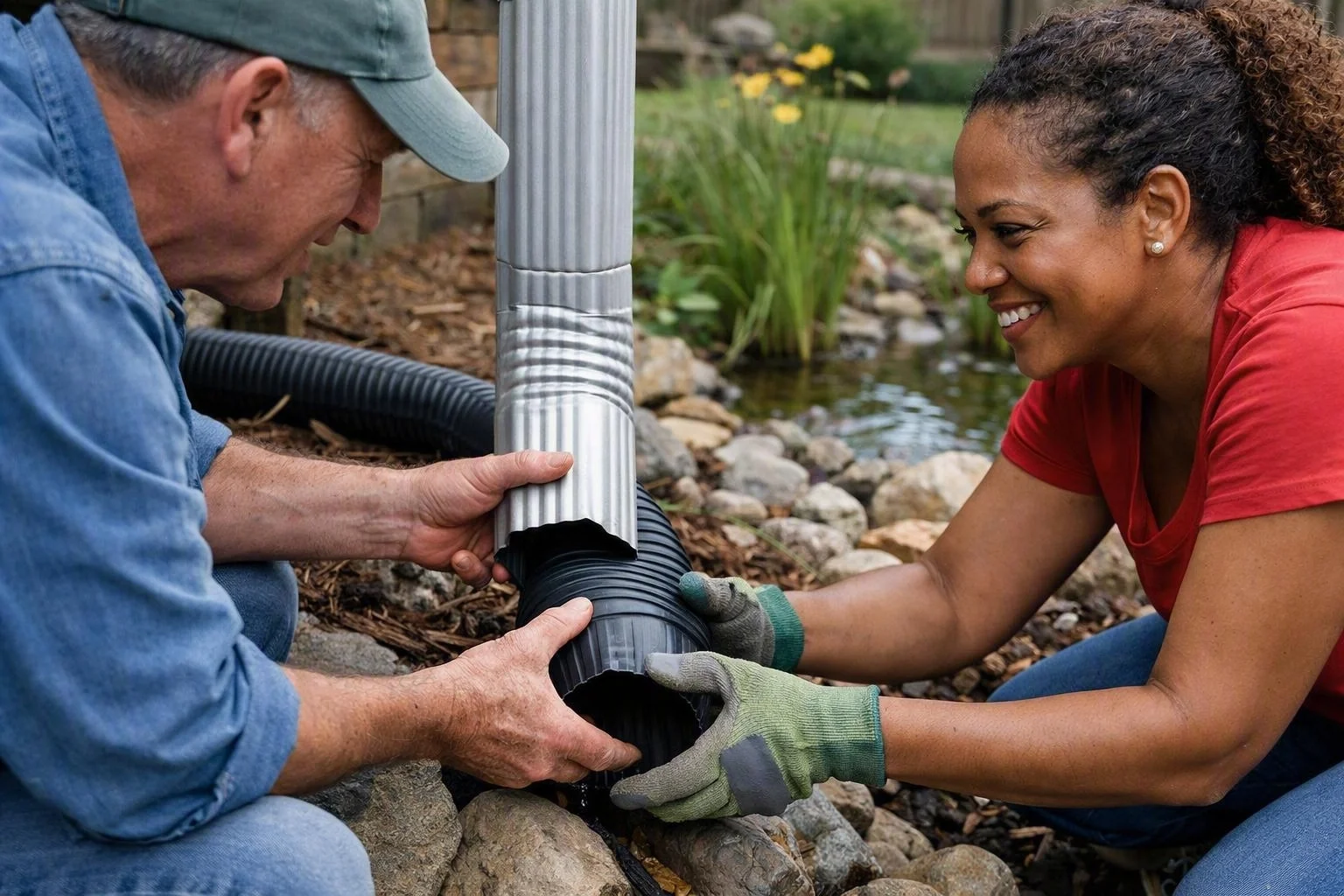
How Do Rain Gardens Work with Gutters and Downspouts?
Rain gardens receive roof runoff in a shallow, planted basin. They slow the water and help soil and roots absorb it. A downspout extension or buried drain line moves water away from the foundation. An overflow path handles water during large storms.
The gutter system collects water from the roof. The downspout carries that water to an inlet. Rocks, mulch, or a level spreader slow the flow. Water then spreads across the basin. This protects the soil from heavy force. It also gives the basin time to hold water.
Each part of the drainage system must work together. Roof size, gutter capacity, downspout size, and rain levels affect flow. Soil drainage also plays a key role. One small basin may serve one roof area. It may fail when several downspouts connect. The foundation setback must be checked before digging.
Native plants can handle wet and dry periods. They help control erosion and absorb water. They can't fix poor grading or hard soil. Most gardens should drain after rain. They shouldn't stay flooded for days. A typical retrofit may use a basin 6 to 12 inches deep. The final size depends on soil tests and roof runoff.
When Is a Rain Garden a Good Fit for Downspout Runoff?
A rain garden works well when soil drains at a useful rate. The yard must guide water safely. The basin must stay well away from the foundation. Native plants should handle wet and dry weather.
An infiltration test checks how fast soil drains. Surface soil may look dry while deeper soil stays wet. A good site has soil that drains well. It also needs space for an overflow path. Utilities and buildings must not block the work. If water flows toward a basement, fix that path first. A rain garden downspout retrofit can't replace foundation protection.
How Do I Direct Downspout Water to a Rain Garden?
A downspout can direct water through an above-ground extension. It can also use solid buried pipe or a level spreader. The outlet must sit inside the basin without washing away soil. Water must keep moving away from the foundation. The inlet should resist leaves and dirt. Heavy rain also needs a safe overflow path.
The best gutter runoff diversion is short and stable. It should also be easy to maintain. Yard grading must keep water from backing up. Several roof sections need a flow check. Don't guess at the combined water volume.
Can a Rain Garden Help with Water Pooling in My Yard?
A rain garden can reduce pooling from roof runoff. The basin must drain within the right time. It won't solve every yard drainage issue. Hard soil, a high water table, or poor grading may need another plan. Groundwater can also cause pooling. Proper sizing and soil tests are needed.
Watch water flow during several storms before choosing a basin. Pooling near a downspout may show a short outlet. It may also point to a blocked pipe or hard soil. A planted basin can catch this flow. It can turn runoff into controlled drainage.
A well-sized garden can help with a wet spot. It must have enough storage space. It also needs a safe overflow route. We compare roof size and rain levels with basin volume.
What Causes Downspout Runoff Problems Before a Retrofit?
Clogged gutters often cause downspout runoff problems. Small, loose, or disconnected downspouts can also cause them. Water may drain too close to the foundation. Hard soil and poor grading add more risk. A gutter inspection should find the cause first. A retrofit can't fix a blocked or failing gutter system.
Homeowners may see stained fascia or overflowing corners. Washed mulch and wet foundation walls are also warning signs. Water may even cross a walkway. Fix the gutter and downspout system first. This gives the drainage plan a sound start. Gutter Installation and Gutter Guards may support a larger roof drainage update. They can help when old parts are hard to clean or poorly sized.
What Problems Can Occur When Redirecting a Downspout to a Rain Garden?
Redirecting a downspout can cause erosion or standing water. It can also cause foundation moisture and pipe blocks. Overflow may occur when the basin is too small. Poor soil, inlets, or outlets can add risk. Check roof size, rain levels, soil, and foundation distance first. The overflow path also needs review.
| Potential problem | Common reason | Useful response |
|---|---|---|
| Soil erosion | Fast flow enters one bare spot | Add stone, mulch, plants, or a level spreader |
| Foundation moisture | Basin or pipe is too close to the structure | Increase the setback and correct grading |
| Standing water | Slow soil infiltration or an undersized outlet | Retest soil and revise basin depth or drainage |
| Basin overflow | Too much roof area or intense rainfall | Provide a stable overflow channel |
| Root damage | Excavation crosses established trees or shrubs | Adjust the route and protect existing roots |
| Pipe blockage | Leaves, sediment, or crushed pipe restricts flow | Use accessible cleanouts and maintain the inlet |
These risks can be controlled with a complete plan. The inlet, basin, soil, plants, and outlet must work together. The system must handle light rain and heavy storms.
How Can You Prevent Rain Garden and Downspout Drainage Problems?
Start by checking and cleaning the gutter system. Test soil drainage before sizing the basin. Size the basin for roof runoff. Protect the inlet and choose plants for the site. Add a safe overflow path. Regular care keeps leaves and dirt from blocking the connection.
New plants need water while they grow. The finished garden still manages stormwater. Keep access around cleanouts and the downspout connection. Leave room around the basin edge. Seasonal checks can find settlement and blocked pipes. They can also find exposed roots and erosion.
What Does a Professional Gutter and Downspout Retrofit Include?
A professional gutter and downspout retrofit starts with a gutter inspection. It includes a runoff review and a soil and grading check. The plan may add an extension, pipe, inlet, or overflow feature. Each part should fit the site. The process should explain future care. It should also explain when another inspection is needed.
Our team starts with the roof drainage source. We check roof area, gutter size, and downspout size. We also check each outlet. Then we review yard grading and foundation distance. We look for utilities and existing trees. We test soil drainage when needed. We also check for basement or foundation moisture.
Next, we choose the best connection. Options include a surface extension or buried drain. A level-spreader outlet may also work. We size the rain garden infiltration basin for expected flow. Native wet-tolerant plants help control erosion. A safe overflow path protects the garden and nearby structures.
Rain Garden Gutter and Downspout Retrofits in Memphis need careful checks. These include roof runoff volume and safe discharge distance. We also review soil drainage and maintenance access. Our crews explain how to inspect the inlet. They explain how to remove dirt and care for plants. They also show how to spot new pooling. The goal is a dependable downspout drainage solution. It should work during heavy rain, not only light rain.
Questions About Gutter Installation and Gutter Guards
How Big Should a Rain Garden Be for a Downspout?
Size depends on roof area, rain levels, soil drainage, and basin depth. It also depends on the overflow path. One small roof section may need a small basin. Several downspouts need more storage. Soil tests and runoff checks are safer than one fixed size.
How Far Should a Downspout Be from the Foundation?
The outlet should keep water from flowing back toward the foundation. Water also shouldn't collect beside the wall. The safe distance depends on grading, soil, and foundation drainage. Roof flow and site limits matter too. A professional check should confirm the distance.
What Type of Soil Is Best for a Rain Garden?
Soil that absorbs water without staying wet works best. Soil with organic matter can help plants grow. Use soil changes only after testing. Heavy clay, hard fill, and shallow rock can slow drainage. These sites may need another drainage plan.
How Long Should Water Remain in a Rain Garden?
Water should drain within the time set by the design. It shouldn't stay still for many days. If water remains, check hard soil and basin size. Check the inlet and overflow outlet too. Long-lasting water may mean the garden isn't suitable.
Can I Connect Multiple Downspouts to One Rain Garden?
Yes, but the basin and pipes must handle the combined roof runoff. The plan must account for gutter and downspout size. It must also account for rain levels and soil drainage. Protect the inlets and control overflow. Separate inlets may reduce erosion and simplify care.
Our team can review the gutter system and downspout route. We can also check yard drainage, soil, and foundation distance. Contact our team to discuss a practical retrofit plan.
Get a Free EstimateRelated Resources
How Much Do Downspout Installation and Extensions Cost?
downspout installation and extension cost
Compared ToShould You Repair or Replace Your Gutters?
gutter repair vs replacement
How It WorksHow a Rain Garden Downspout Retrofit Works
rain garden downspout retrofit installation
How It WorksWhat Happens During a Professional Gutter Inspection?
professional gutter inspection process