
What is Drip Edge?
Drip Edge is a metal or rigid water-shedding strip installed along roof edges to direct rainwater away from the roof deck, fascia, and wall surfaces. It sits beneath or over selected roofing layers and often extends into the gutter. Proper placement helps control runoff, protect roof edges, and support a clean connection between roofing and gutters.
Quick Facts About Drip Edge
Category
Roof-edge flashing
Used for
Directing runoff and protecting roof edges
Common confusion
Often confused with gutter apron
Also called
Eave drip edge, Roof edge flashing
Often discussed with
Gutter Installation, Gutter Replacement
Key Takeaways About Drip Edge
- Drip edge directs roof runoff away from exposed roof edges and into gutters.
- The metal profile must match the roof edge, underlayment, fascia, and gutter layout.
- Drip edge is flashing, not a gutter, gutter guard, or replacement for roof underlayment.
- Loose, missing, or poorly placed sections can allow water behind fascia and under roofing.
- Installers should inspect corners, joints, fasteners, and the edge above each gutter run.
Understanding Drip Edge
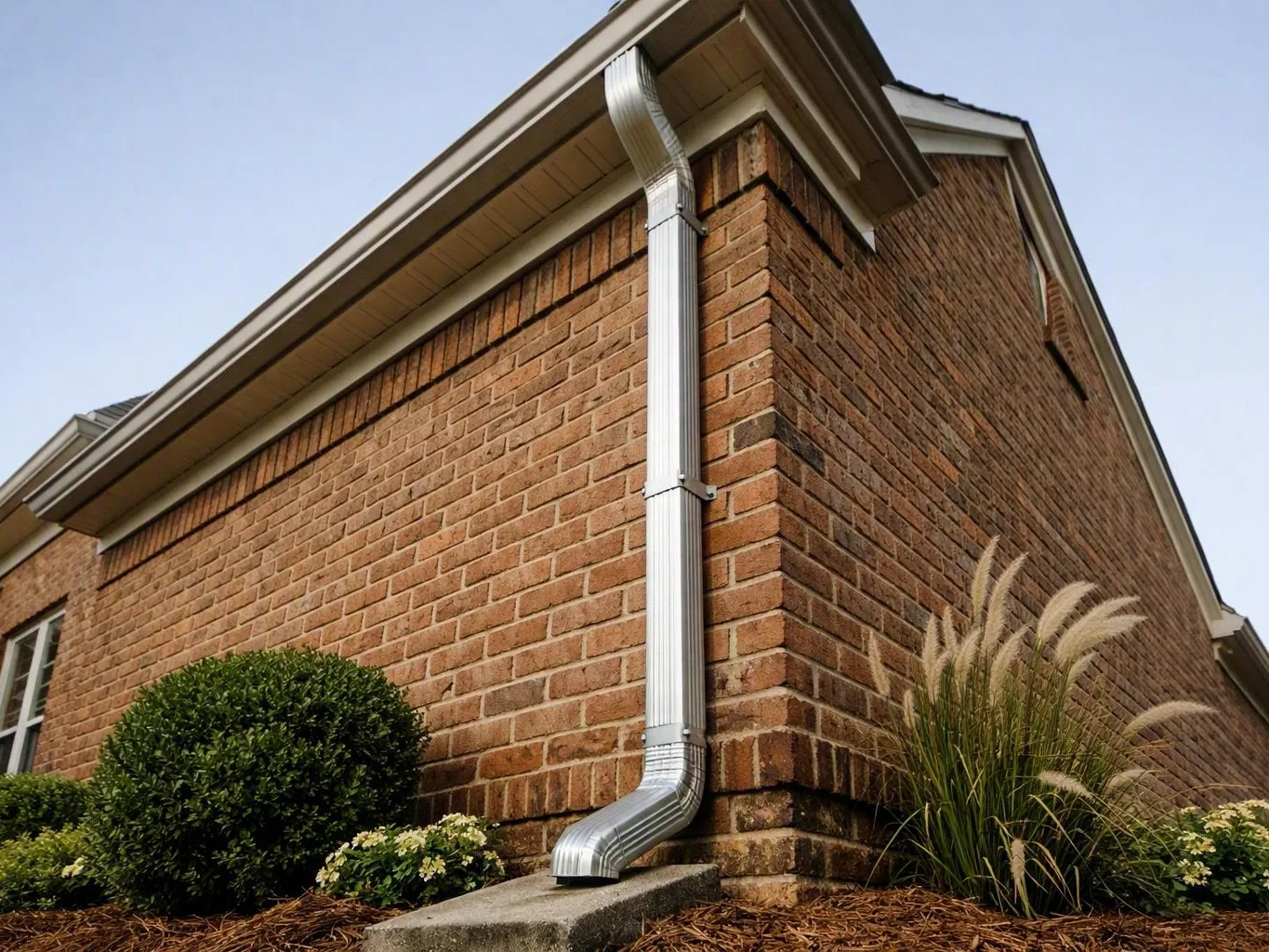
Drip edge is a formed strip of metal or another approved rigid material. It's placed along the lower roof edge and sloped gable edges. The strip covers the exposed roof assembly edge. It creates a controlled path for rainwater. Its lower flange extends past the fascia or trim. This lets water fall into the gutter instead of soaking the wood.
Related glossary terms: Flashing, Gutter Apron, Fascia Board.
A typical assembly includes roof deckingunderlayment, shingles or another roof covering, fascia, and a gutter. Drip edge works with these parts. It doesn't replace any of them. Installers may place one flange beneath the underlayment. They may place another over the roofing near the rake edge. The roof detail sets the exact order. Local code and maker instructions also guide the order.
How Drip Edge Works, Is Measured, or Is Used?
Drip edge uses a bent shape to move water past the roof edge. Rain travels down the roof covering. It reaches the metal flange and follows the projection toward the gutter. The shape also limits direct contact between water and the fascia board. It protects the roof decking and roof edge too.
Installers measure each eave and rake run. They select pieces long enough to cover the edge. The pieces need proper overlap at joints. They check the roof line for straightness. They cut pieces around corners. They fasten the metal without crushing or changing its shape. The lower edge should line up with the gutter. Seams and corners should shed water. They shouldn't direct water behind the trim.
Common materials include galvanized steel, aluminum, and copper. The chosen material should work with the roof system and nearby metals. This helps lower the risk of corrosion. A gutter apron is a related shape. It usually extends farther back over the gutter. Standard drip edge may have a shorter upper flange.
Why Drip Edge Matters?
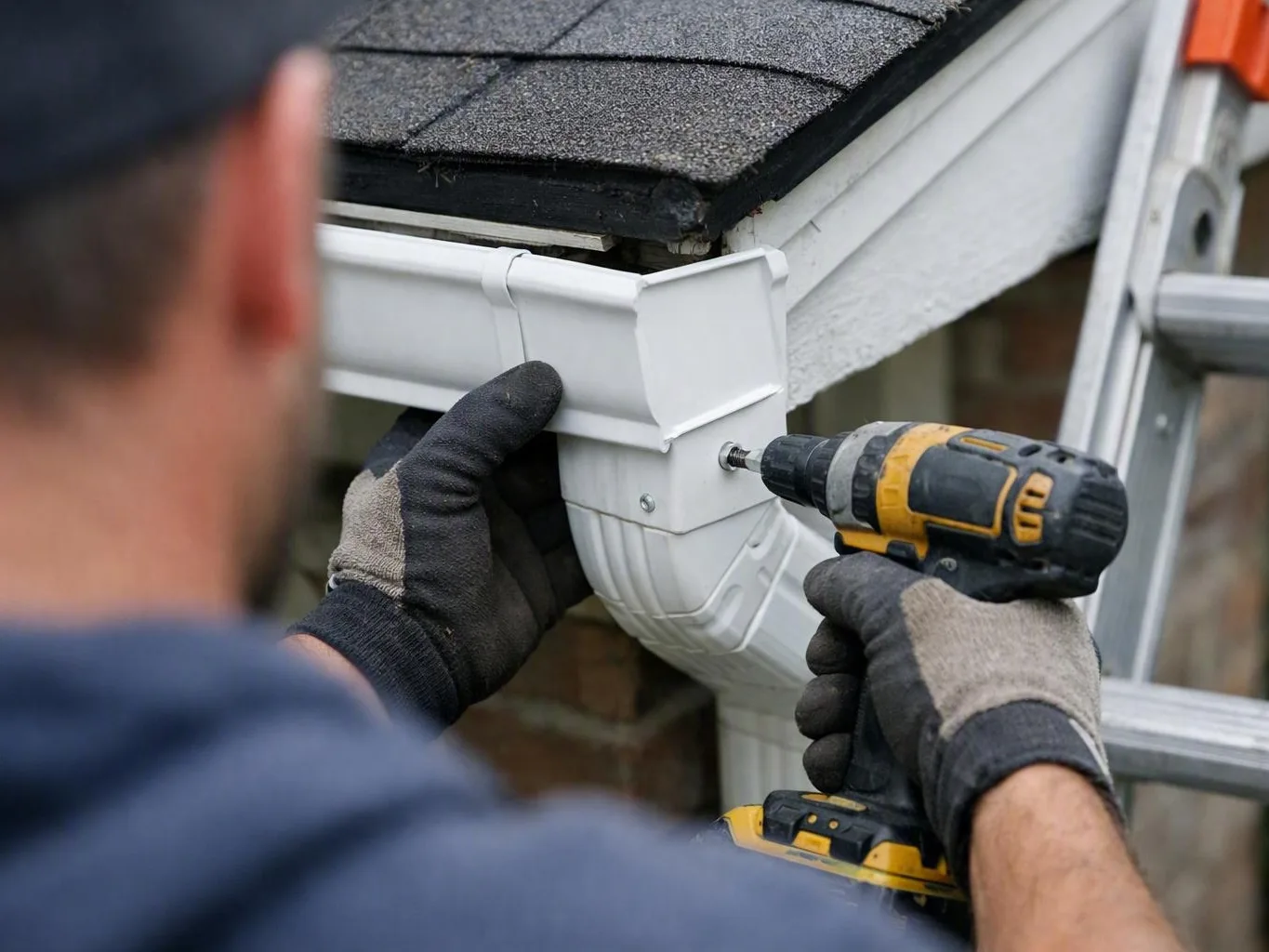
Drip edge protects areas that can weaken after repeated wetting. Without a sound edge detail, runoff may reach the fascia board. It may also reach the roof decking, soffit, or wall trim. Trapped moisture can cause staining, swelling, paint failure, decay, or insect activity. This can happen over time.
The component also helps gutters work better. It gives roof water a clear landing point. A gutter below a poor roof edge may miss water during heavy rain. This can happen even when its size and slope are correct. Proper edge flashing helps separate roof drainage from the building envelope. It also makes future gutter checks easier.
When Drip Edge Matters Most?
Drip edge needs close attention during a reroof, gutter replacement, or eave repair. Roofing work can expose bent, rusted, short, or missing sections. These sections may have stayed hidden under shingles. Reusing damaged metal may leave gaps at corners. It may also create a path behind the gutter.
Inspection matters after wind damage, fascia repairs, or repeated staining below the roof edge. Look for daylight beneath the metal. Check for rust holes, lifted sections, and open joints. Look for water marks. Check gutters that sit too far forward or too far back. In Memphis, heavy rain can test these details quickly. The roof edge and gutter connection should be checked as one drainage assembly.
How to Evaluate Drip Edge?
- Check whether every eave and rake edge has continuous metal coverage without visible gaps or exposed wood.
- Confirm that the lower flange directs water into the gutter rather than behind the fascia or onto the wall.
- Inspect joints for secure overlap, corrosion, lifted edges, and fasteners that have pulled loose.
- Compare the metal profile with the roof covering, underlayment placement, fascia condition, and gutter position.
- Look inside the attic or behind fascia for staining that may indicate water bypassing the edge.
Related Concepts Compared
Drip Edge vs. Gutter Apron
A gutter apron is a type of roof-edge flashing designed with a longer flange that reaches farther into the gutter. Standard drip edge may protect the edge without extending as far over the gutter.
Drip Edge vs. Flashing
Flashing is the broad category for materials that control water at roof and building joints. Drip edge is a specific flashing component for roof perimeters.
Drip Edge vs. Fascia Board
The fascia board is the trim board at the roof edge that often supports the gutter. Drip edge protects the fascia from runoff, but it does not replace or repair the board.
Drip Edge vs. Gutter
A gutter collects water after it leaves the roof edge and carries it toward a downspout. Drip edge guides water to the gutter and protects the roof perimeter.
Expert Note
A roof edge can have metal in place and still perform poorly if the flange ends behind the gutter, the corner is open, or the underlayment sequence traps water. Inspect the edge as a complete roof-to-gutter detail, not as an isolated strip of metal.
Common Mistakes or Myths About Drip Edge
- Treating drip edge as a gutter or gutter guard.
- Installing short pieces that leave open gaps at corners or joints.
- Placing the metal so runoff drains behind the fascia.
- Nailing through the visible drainage path or bending the flange out of shape.
- Covering damaged roof-edge wood without repairing the underlying moisture problem.
Drip Edge in Practice: A Real-World Example
A homeowner replaces a rusted gutter but leaves a bent drip edge behind the old system. During the next heavy storm, water runs behind the fascia instead of into the new gutter. Replacing or repositioning the edge may be necessary before the gutter can drain correctly.
Sources & Further Reading on Drip Edge
Related Terms
Flashing
Flashing is thin, water-resistant material installed at roof joints, wall intersections, openings, and edges to direct…
Gutter Apron
Gutter Apron is a strip of metal flashing installed beneath roof shingles and behind the back…
Fascia Board
Fascia Board is a long, straight board attached along the lower edge of a roof, where…
Downspout
Downspout is a vertical pipe that carries water from a gutter to the ground or a…
All Pro Roofing and Gutters
Have Questions About Drip Edge?
Contact All Pro Roofing and Gutters for practical guidance on Drip Edge and related gutter installation and gutter guards work in Memphis.