
What is Leaf Guards?
Leaf Guards is a category of gutter covers installed over open gutters to limit leaves, pine needles, and other debris from entering the channel. The covers allow rainwater to pass toward the downspouts while reducing the amount of manual gutter cleaning.
Quick Facts About Leaf Guards
Category
Gutter protection component
Used for
Limiting leaves and debris in gutters
Common confusion
Not a substitute for all gutter maintenance
Also called
Gutter guards, Gutter covers
Often discussed with
Gutter Guard Installation, Gutter Inspection
Key Takeaways About Leaf Guards
- Leaf guards reduce debris entry, but they do not make gutters maintenance-free.
- Screen, mesh, reverse-curve, and brush designs handle debris and rainfall in different ways.
- Correct slope, secure fasteners, and compatible roof flashing affect gutter guard performance.
- Heavy rain can expose poor designs through overflow, ponding, or water bypass.
- Inspect the roof edge, gutter channel, and downspouts before choosing a guard system.
Understanding Leaf Guards
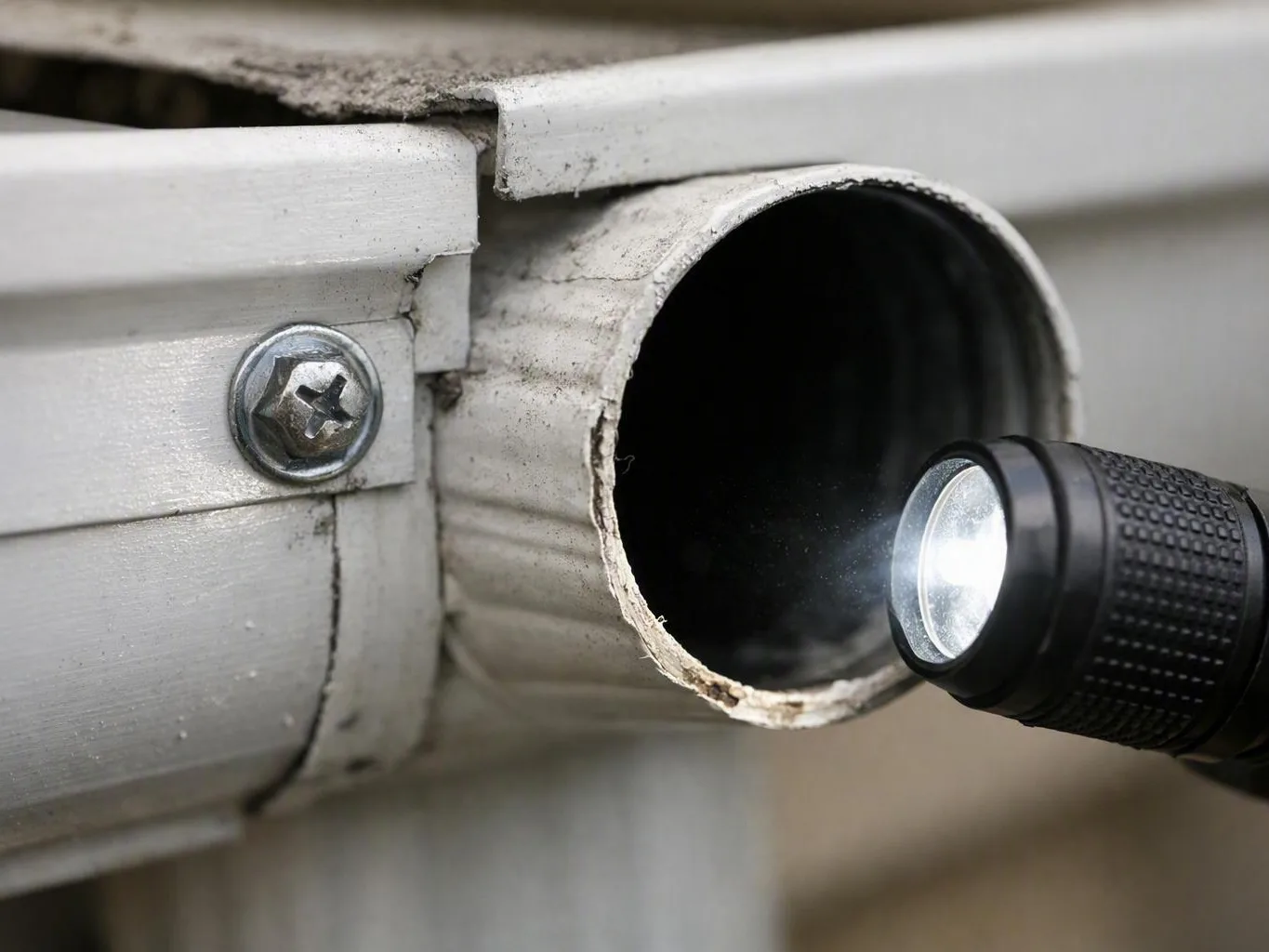
Leaf Guards are covers or inserts placed over the opening of a gutter. They keep leaves, pine needles, roof grit, and similar debris out. Rain still flows toward the downspout. Some products sit on top of the gutter. Others fit inside it or attach beneath the roof edge.
Related glossary terms: Gutter Screens, Gutter Slope, Gutter Apron.
Common designs include perforated screens, fine mesh, solid-surface covers, and brush-style inserts. Each design handles debris in a different way. Mesh products filter water through small openings. Solid covers direct water over a shaped edge. Heavier debris then falls away. No design blocks every material. Small particles can still collect on the cover or inside the gutter.
How Leaf Guards Works, Is Measured, or Is Used?
Installation begins with an inspection of the roof edge, gutter slope, joints, hangers, and downspout outlets. A contractor may need to repair loose sections. They may also correct standing water before adding a cover. The guard is then cut to fit each gutter run. Workers secure it with compatible fasteners. They check corners, valleys, and end caps.
Performance depends on how well the system moves water during normal rainfall. It also depends on how easily the system sheds debris. Important factors include the opening size, surface angle, and material strength. Gutter capacity and downspout size also matter. A cover that stops large leaves may still clog with roof grit, seeds, or pine needles. Water testing after installation can reveal overflow, gaps, and poor alignment.
- Check that the cover stays secure along the full gutter length.
- Look for exposed gaps at corners, roof valleys, and downspout connections.
- Confirm that water enters the gutter instead of running behind the fascia.
Why Leaf Guards Matters?

Leaf guards can reduce how often you clean gutters. They can also lower debris reaching downspouts. Clearer channels help move roof runoff away from fascia boards, siding, foundations, and walkways. They can also reduce blockages. Blockages can create heavy, water-filled gutters.
The protection has limits. Debris can rest on the cover. Moss can grow in shaded areas. Fine material can enter through openings. A blocked or poorly pitched gutter can still overflow with a guard. Regular visual inspections remain useful. Check gutters after storms and during heavy leaf fall.
When Leaf Guards Matters Most?
Leaf guards matter most on properties surrounded by mature trees. They also help homes with steep or complex roofs. They suit buildings where gutter access is difficult. Review them closely where pine needles, seed pods, or roof grit cause repeated blockages. The right choice must match the gutter profile, roof edge, and local rainfall. It must also match the type of debris present.
Before selecting a system, compare the installed design with the existing gutter hangers, gutter apron, and gutter slope. Ask how the product handles corners, roof valleys, and cleaning access. In Memphis, TN, seasonal storms and nearby trees make water testing useful. Downspout inspection also helps during gutter guard work by All Pro Roofing and Gutters.
How to Evaluate Leaf Guards?
- Inspect the cover for gaps, lifted edges, loose fasteners, and openings near corners or roof valleys.
- Confirm that the existing gutter has a consistent slope and no standing water before installation.
- Test water flow during a hose test, especially beneath roof valleys and at inside corners.
- Ask how the design handles pine needles, roof grit, seed pods, and heavy rainfall.
- Check whether the system allows practical access for inspection and cleaning.
Related Concepts Compared
Leaf Guards vs. Gutter Screens
Gutter screens are one type of leaf guard. They usually use a perforated or mesh panel, while leaf guards also include solid covers and brush inserts.
Leaf Guards vs. Gutter Covers
Gutter covers is a broad term for products placed over gutters. Leaf guards are commonly used as a similar name, although product designs vary.
Leaf Guards vs. Gutter Cleaning
Gutter cleaning removes existing debris from the gutter and downspout. Leaf guards aim to reduce new debris entry but do not remove debris already present.
Leaf Guards vs. Downspout
A downspout carries water from the gutter to the ground or a drainage system. A leaf guard protects the gutter opening and does not replace the downspout.
Expert Note
A guard cannot correct a sagging gutter, damaged fascia, blocked downspout, or poor roof drainage. Inspect and repair those conditions first. In practice, the cover’s fit at valleys and corners often matters as much as its filter material.
Common Mistakes or Myths About Leaf Guards
- Assuming leaf guards eliminate every gutter cleaning task.
- Installing covers over gutters with bad slope or standing water.
- Ignoring debris buildup on top of the guard.
- Leaving downspouts blocked after adding a gutter cover.
- Failing to check roof valleys and inside corners for overflow.
Leaf Guards in Practice: A Real-World Example
A home beneath two mature oak trees has repeated gutter blockages each fall. A fine-mesh leaf guard reduces large leaf entry, but the homeowner still inspects the mesh and flushes the downspouts after major storms.
Sources & Further Reading on Leaf Guards
Related Services
Related Terms
Gutter Screens
Gutter Screens are protective covers fitted over open gutters to limit leaves, pine needles, twigs, and…
Gutter Slope
Gutter Slope is the slight angle that directs water through a gutter toward a downspout. Installers…
Gutter Apron
Gutter Apron is a strip of metal flashing installed beneath roof shingles and behind the back…
Downspout
Downspout is a vertical pipe that carries water from a gutter to the ground or a…
All Pro Roofing and Gutters
Have Questions About Leaf Guards?
Contact All Pro Roofing and Gutters for practical guidance on Leaf Guards and related gutter installation and gutter guards work in Memphis.